


Ever wondered why some students chat with native speakers within months while others struggle for years? It’s not simply about talent. Strategy, consistency, and knowing what “fluent” means for your goals all matter.
Your timeline depends on three main factors: the level you aim for, your language background, and how many hours you study each week. A dedicated learner may be able to have basic conversations within a few months.
Reaching advanced fluency is a longer journey. Getting to the C1 or C2 level can take several years of steady practice and meaningful exposure to the language.
Language educators use the CEFR framework to describe proficiency. Institutions such as the Goethe-Institut, as well as many universities and employers, use this scale to assess language skills. Its levels range from beginner A1 to highly proficient C2.
This guide breaks down every stage of proficiency, estimated study hours, and a practical roadmap. You’ll learn what it takes to build useful German skills efficiently and with confidence.
Key Takeaways
- Your timeline for fluency depends on your target proficiency level, prior language experience, and weekly study commitment.
- Basic conversational ability may be achievable within a few months of consistent practice.
- Advanced proficiency at the C1 or C2 level usually requires years of dedicated study and regular language use.
- The CEFR framework provides a standardized way to describe and measure progress.
- A clear, step-by-step plan can help you reach your goals more efficiently.
- Estimated study hours vary significantly based on your starting point, learning method, and exposure to German.
Understanding German Proficiency Levels and Realistic Timelines
To set a realistic timeline for learning German, first understand the proficiency scale used by many universities, employers, and language schools. This scale, known as the CEFR, makes progress in German easier to describe and assess. Once you know your target, you can estimate how many study hours you may need to reach it.
CEFR Levels Explained: A1 to C2
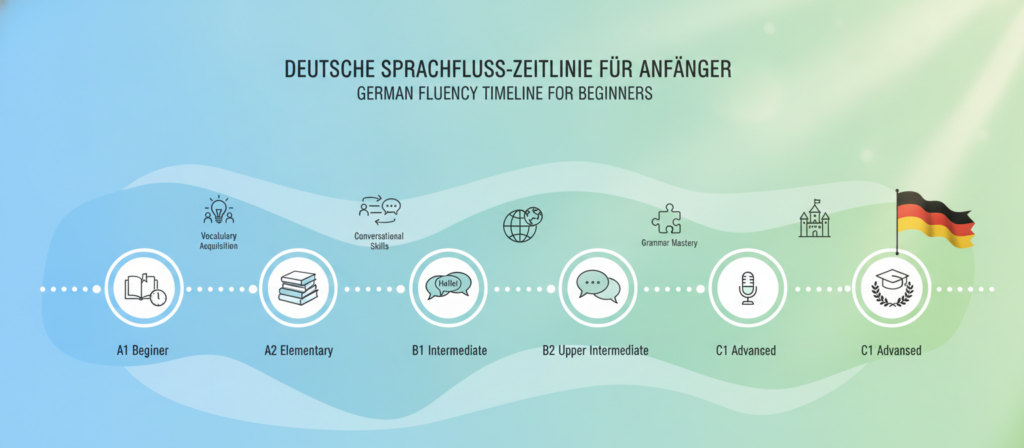
The Common European Framework of Reference for Languages divides language ability into six stages: A1, A2, B1, B2, C1, and C2. At A1, you can use simple greetings and share basic personal information. A2 allows you to handle routine everyday tasks and have short conversations.
By B1, you can discuss familiar topics and manage many situations while travelling in German-speaking areas. At B2, you can participate in more detailed workplace or academic discussions. C1 and C2 indicate advanced and highly proficient language use, although exact study or employment requirements vary by institution.
Estimated Hours Needed for Each Level
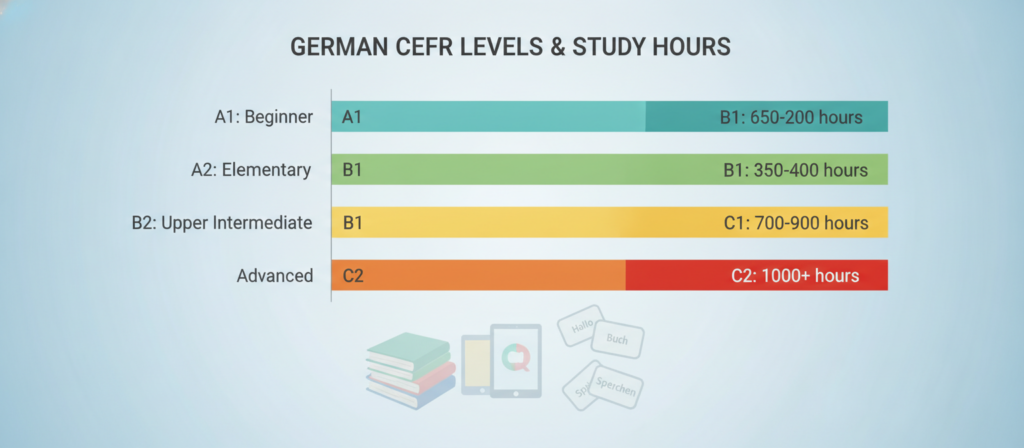
Language institutions and course providers publish estimates of the German language learning hours associated with each level. The ranges below are broad guidelines rather than strict rules. Your actual progress will depend on your study habits, background, instruction, and exposure to the language.
| CEFR Level | Estimated Hours | Real-World Skill |
|---|---|---|
| A1 | 80–200 | Basic greetings, simple questions |
| A2 | 200–350 | Everyday conversations, shopping |
| B1 | 350–650 | Independent travel, familiar topics |
| B2 | 650–900 | Workplace discussions, study abroad |
| C1 | 900–1,200 | Advanced professional communication |
| C2 | 1,200+ | Highly proficient language use |
Factors That Influence Your Learning Speed
Your journey through German A1 to C2 is shaped by personal factors. Consider how the following may affect your learning pace:
- Native language: English speakers may recognize some German vocabulary and structures because both languages have Germanic roots.
- Prior language exposure: Knowing Dutch, Swedish, or another Germanic language may help you learn German more quickly.
- Study consistency: Regular practice is generally more effective than occasional cramming.
- Immersion opportunities: Regular exposure to German through travel, work, media, or conversation can improve retention.
- Motivation level: Clear goals can help you stay motivated and focused.
How Long to Learn German: A Step-by-Step Plan to Fluency
Now that you have a general timeline, it’s time to plan your path to German fluency. This five-step plan turns your goals into daily actions. It can help you find the best way to learn German for your schedule, budget, and learning style.
Step 1: Set Clear Goals and a Target CEFR Level
Before starting, ask yourself why you want to learn German. Are you moving to Berlin, studying in Germany, or preparing for work in Austria? Your motivation will affect the vocabulary, skills, and pace you need.
Once you know your reason, choose a realistic CEFR level. For a holiday, A2 basics might be enough. For work or university, you may need B2 or C1, depending on the employer or institution. Setting a goal early keeps your study plan focused.
Step 2: Choose a Learning Method That Fits Your Lifestyle
The best way to learn German depends on your daily routine, budget, and preferences. Comparing different German learning methods can help you choose an approach you’ll maintain.
Self-Study Apps and Online Courses
German learning apps can provide short lessons for busy days. They are flexible and can be useful for reviewing vocabulary and basic grammar, but they work best as part of a broader learning plan.
For more structured learning, an organized online course can provide a clear syllabus, regular assignments, and progress checks. This may suit learners who value independence but still want a defined path.
Group Classes and Private Tutors
Group classes provide structure, deadlines, and accountability. Evening or online classes can be practical for learners with full-time jobs.
Private lessons can be tailored to your goals, allowing a qualified teacher to correct mistakes and adjust the pace as you improve. At Your Native Teacher, learners can study German online with qualified teachers and receive personalized guidance based on their goals.
Immersion and Study Abroad Programs
Immersion can accelerate learning by increasing your exposure to German. A German immersion program in a German-speaking country creates frequent opportunities to use the language in real situations.
Language exchanges, au pair placements, and work-study arrangements may offer similar opportunities. Even a few weeks of regular interaction with German speakers can strengthen your confidence and listening skills, although progress varies from learner to learner.
| Learning Method | Weekly Time Commitment | Best For | Typical Cost |
|---|---|---|---|
| Apps & Online Courses | 3–7 hours | Busy schedules, self-paced learners | Varies by platform and course format |
| Group Classes | 2–4 hours + homework | Structured accountability, social learners | Varies by provider and course length |
| Private Lessons | 2–5 hours | Personalized feedback, targeted correction | Varies by teacher, provider, and lesson length |
| Immersion Programs | 20–40 hours (intensive) | Extensive exposure, real-world practice | Varies widely by destination and program |
Step 3: Build a Consistent Weekly Study Schedule
Consistency matters more than occasional bursts of intensity. If your schedule allows, aim for five to ten hours per week, spread across shorter sessions. This can strengthen memory and reduce the risk of burnout.
A sample German study schedule might include morning vocabulary practice, a grammar lesson during the week, and a weekend conversation session. Spreading out your effort can improve retention.
Mark this time in your calendar like any other commitment. Treating German practice as a regular priority is crucial for steady progress.
Step 4: Practice Speaking and Listening Every Day
Grammar exercises are useful, but they are not enough on their own. Frequent speaking and listening practice is essential for developing practical fluency.
Use a language-exchange platform or practise with a teacher or conversation partner. Listening to German podcasts and other authentic audio can also train your ear for natural speech.
Try shadowing: repeat audio aloud immediately after hearing it. This can sharpen your pronunciation, rhythm, and conversational confidence.
Step 5: Track Milestones and Adjust Your Pace
Progress can be hard to see without clear checkpoints. Try a CEFR-aligned practice assessment periodically to review your progress and identify skills that need more attention.
Set smaller goals, such as learning a useful group of new words or having a five-minute conversation without switching to English. These achievements can help maintain your motivation.
If progress slows, don’t worry. You could adjust your study time, work with a teacher, or change your method. Following these German learning tips can help you adapt and keep moving forward.
Conclusion
There’s no single number that answers how long it takes to speak German confidently. Your timeline depends on your goals, the method you choose, and how many hours you study each week.
Setting a clear CEFR target gives your studies direction. Choosing an approach that fits your life—whether that’s self-study, guided private lessons, or a structured German language course—will influence how efficiently you move forward. Regular practice ties everything together and keeps your progress from stalling.
If you’re ready to learn German for beginners, don’t wait for a perfect schedule to appear. Ten minutes of vocabulary review or one short conversation in German can help build momentum, and small habits repeated daily are often more sustainable than occasional long sessions.
Fluency isn’t a talent reserved for a lucky few. It’s the outcome of steady, focused effort over months and years. Start today, check your progress against meaningful milestones, and adjust your pace when life gets busy. With a sound strategy and genuine consistency, speaking German well is an achievable goal.