


Ever wondered if it’s too late to pick up a brand-new language, or whether you need a special talent for it? Good news: it isn’t, and you don’t.
Adults of all ages and backgrounds learn German from scratch. You can too. Progress is largely about being consistent and having the right plan.
Starting with no experience can feel intimidating at first. However, with the right roadmap, that fear becomes easier to manage. You don’t need to have grown up abroad or spent years in language classrooms.
This guide shows you how to start with simple steps. You’ll learn how to prepare, build basic skills such as vocabulary and pronunciation, and keep going even when life gets busy.
German for beginners doesn’t have to be confusing or overwhelming. Follow a clear plan, practise consistently, and your confidence will gradually grow.
Key Takeaways
- Beginning with no previous experience is possible at any age.
- Consistency and a clear plan matter more than natural talent or prior experience.
- This guide covers mental preparation, core language skills, and ways to stay on track.
- Building vocabulary and pronunciation early creates a strong foundation.
- Small, steady steps can lead to more confident conversations over time.
1. Prepare Yourself for the German Learning Journey
Think of this stage as packing your bags before a big trip—you need the right mindset and tools before you set off. A little preparation now can save you frustration later. It also helps you build habits that stick instead of abandoning them after one difficult week.
Set Realistic Goals and Find Your Motivation
Why do you want to learn German? Maybe you’re planning a move to Berlin, pursuing a job opportunity, reconnecting with family roots, or simply looking for a new challenge. Whatever your reason, write it down. It can help you continue when motivation fades.
Break your big goal into small wins. Aim to learn ten useful words a week or hold a short conversation by the end of the month. Small victories build real momentum over time.
Get Familiar with German Sounds and Pronunciation
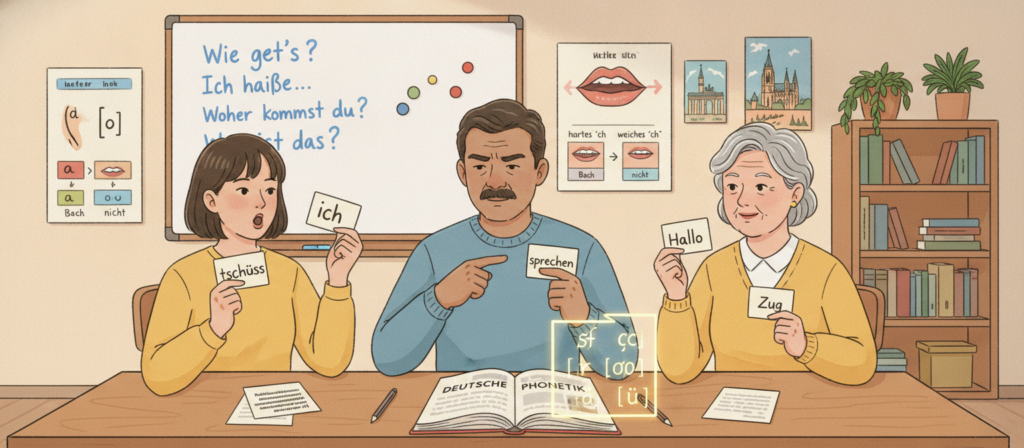
German pronunciation for beginners can feel tricky at first, especially sounds such as the umlauts ä, ö, and ü. The different pronunciations of “ch” and regional variations of the German “r” can also challenge new learners.
Don’t worry—these sounds become more familiar with regular practice. Listen closely to proficient speakers, repeat short phrases aloud, and give your ear time to adjust. Personalised feedback from a qualified teacher can also help you identify and correct pronunciation problems before they become habits.
Choose the Right Learning Tools and Resources
The best German learning resources combine several formats to suit your learning style and goals:
- Language-learning or vocabulary apps for short daily practice
- Beginner-friendly German podcasts for listening skills
- A reliable textbook or course for structured grammar study
- Online learner communities for encouragement and practical advice
- Live lessons with a qualified teacher for structure, speaking practice, and personalised feedback
At Your Native Teacher, learners can work online with qualified teachers and receive guidance based on their German level and goals. Apps, podcasts, and textbooks can support this process, but they are most effective when used as part of a balanced learning plan.
One of the simplest German learning tips is to choose tools you genuinely enjoy using. Consistency beats perfection, so build a toolkit that fits your schedule and keeps you coming back.
2. Learn German From Scratch: Step-by-Step Core Skills
Real progress starts when you stop preparing and start practising. This is when your German skills begin to grow, one step at a time. A clear plan can help you move from recognising words to using German in simple conversations.
Start with Everyday Vocabulary and Phrases
Building a strong German foundation starts with words you’ll actually use. Focus on simple greetings such as “Guten Tag” (good day) and “Wie geht’s?” (how are you?). These small steps add up and help you use the language from the beginning.
Building your German vocabulary for beginners doesn’t mean memorising a large number of words at once. Start with a few common words related to daily life and practise using them immediately.
| German Word | English Meaning | Everyday Use |
|---|---|---|
| Danke | Thank you | Expressing gratitude |
| Bitte | Please/You’re welcome | Polite requests or replies |
| Entschuldigung | Excuse me/Sorry | Apologising or getting attention |
| Ich heiße… | My name is… | Introducing yourself |
Master Basic Grammar Rules Gradually
German grammar might seem difficult, but it becomes more manageable when you break it down. Start with the definite articles der (masculine), die (feminine), and das (neuter). Learn each new noun together with its article, as this will help you use it correctly later.
Next, learn simple sentence structures and present-tense verb forms. For example, “ich spreche” means “I speak,” while “du sprichst” means “you speak.” Notice how changes to the verb reflect the subject of the sentence.
Learning basic German grammar works best with real examples, not just isolated rules. Practise one concept at a time, use it in a sentence, and then review it regularly. This approach can help you avoid feeling overwhelmed while building a strong foundation.
Practice Speaking from Day One
Don’t wait to start speaking until you think you’re ready. Begin with short phrases from your first lesson, even if it feels awkward. Early practice helps you become familiar with producing German sounds and forming sentences in real time.
Try these simple speaking tips:
- Talk to yourself in German while doing daily tasks
- Use a language-exchange platform for supplementary conversation practice
- Repeat phrases aloud after listening to short videos or audio clips
- Record yourself speaking and listen for areas to improve
- Work with a qualified German teacher for correction and guided conversation
Language exchanges can provide useful informal practice, but partners may not always be able to explain mistakes or provide structured feedback. Regular lessons with a teacher can help you improve pronunciation, grammar, and speaking accuracy more systematically.
Confidence grows through practice, not perfection. If your goal is to speak German confidently, focus on regular, low-pressure practice and useful feedback.
Immerse Yourself in German Every Day
Learning German isn’t limited to lesson or study time. Add German to your daily life through music, podcasts, news, or German-language films and programmes. Small, regular periods of exposure help your ear become more familiar with the language and reinforce vocabulary in context.
Try changing your phone’s language to German once you know enough basic vocabulary to navigate it. This can expose you to common words throughout the day, although you can switch back if it makes important settings difficult to understand.
These simple German immersion techniques add up over time. Combined with focused study and speaking practice, immersion can help you make steady progress by turning everyday moments into learning opportunities.
Stay Consistent and Track Your Progress
Short, frequent practice is often more manageable than occasional long study sessions. Even fifteen minutes on a busy day can help maintain your learning habit. Regular review also makes it easier to retain new words and structures.
Keep track of your progress with a journal, checklist, or learning app. Seeing what you have achieved can keep you motivated, especially when the language feels difficult. Celebrate small victories, such as completing your first conversation or learning ten useful words.
Long-term progress depends more on sustainable consistency than on occasional bursts of intensive effort.
3. Conclusion
Every proficient German speaker was once a beginner. They also faced unfamiliar words and wondered when the language would begin to make sense. Progress comes one step at a time.
Learning German from scratch isn’t about being perfect or progressing as quickly as possible. It’s about practising regularly. Work on your pronunciation, learn useful vocabulary, review basic grammar, and let real conversations guide your development.
Your journey will have ups and downs. Some days you’ll feel highly motivated; on others, progress may seem slower. Both are normal when building a new skill, and neither means you’re failing.
What matters is that you keep going. Open your textbook, listen to German, and try to form sentences even when they feel clumsy. These small efforts accumulate over time.
As your skills improve, everyday goals such as ordering food, chatting with colleagues, or understanding German films will become more manageable. That’s when you’ll begin to speak German confidently in situations that matter to you.
Stay patient, stay curious, and trust the process. With consistent practice and appropriate guidance, you can build lasting German skills.