


Ever wondered why some people learn a new language for free while others spend $150 or more each month? Language-learning costs vary widely, so understanding what you are paying for can help you make a smarter choice.
The cost of learning a language online depends on several factors. The learning format, lesson frequency, teacher’s experience and language you want to study can all affect the final price.
Options range from free self-study resources to monthly subscriptions and live private lessons. The availability of qualified teachers and the amount of instructional time you need can also affect your total investment.
This guide explains the main factors that influence online language lesson prices and compares self-study tools, group classes and private instruction.
You’ll also find a simple budgeting method to help you choose an option that fits your goals, schedule and budget.
Key Takeaways
- Language-learning costs range from free self-study resources to $200 or more per month for frequent private lessons.
- Your total expense depends on the learning format, lesson frequency, language and teacher’s experience.
- Self-study tools usually cost less, while live lessons provide personalised feedback and speaking practice.
- Languages with fewer available teachers may cost more to study.
- A clear monthly budget helps you match your spending to your learning goals.
- The cheapest option is not always the best value if it does not provide the guidance you need.
1. Key Factors That Influence Online Language Lessons Cost
What makes a low-cost monthly app different from a live private lesson? The main difference is the level of personal instruction. Prices change based on how you learn, how often you study, the teacher’s qualifications and the language you choose.
Four main factors affect lesson prices: lesson format, service type, teacher availability and teacher experience. Understanding these factors can help you find lessons that suit both your budget and your learning goals.
Group Classes and One-on-One Sessions
Group vs private lesson cost can vary considerably. Group classes are generally less expensive per learner because one teacher works with several students. Private sessions cost more because you receive the teacher’s full attention, targeted feedback and a lesson plan adapted to your needs.
Self-Paced Apps and Real-Time Teaching
App-based language learning usually involves a free plan or a flat subscription fee for self-paced exercises. Live online language lessons cost more because they include real-time instruction, speaking practice and personalised feedback from a teacher.
Self-study tools can be useful for vocabulary review and regular practice, but they are best treated as a supplement to teacher-led learning when your goals require confident communication, exam preparation or professional language skills.
How Demand Shapes Language Pricing
Language lesson pricing is partly influenced by teacher availability. Widely studied languages such as Spanish, French and English often have a large pool of teachers. Less commonly taught languages may have fewer qualified instructors, which can result in higher prices or more limited scheduling options.
Credentials and Teacher Experience
Teacher experience and qualifications can also affect the price. A qualified teacher with substantial experience, specialist knowledge or exam-preparation expertise may charge more than a new tutor offering informal conversation practice. Location, operating costs and lesson length can influence rates as well.
| Factor | Budget-Friendly Option | Higher-Support Option | Typical Price Impact |
|---|---|---|---|
| Lesson Format | Group Classes | Private Sessions | Private lessons generally cost more because instruction is personalised |
| Learning Format | Self-Study Tools | Live Teacher-Led Lessons | Apps may be free or subscription-based; live lessons are usually priced per lesson or package |
| Language Choice | Languages with Many Available Teachers | Languages with Fewer Available Teachers | Limited teacher availability can increase prices |
| Teacher Background | Conversation Practice | Qualified or Specialist Teacher | Experience, qualifications and specialist expertise can raise the lesson rate |
2. Comparing Costs Across Online Learning Options
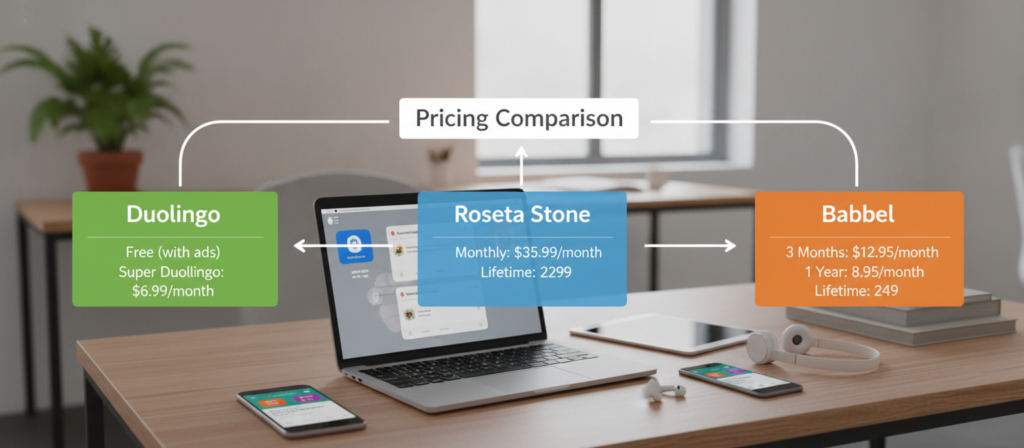
Online language learning is available through several different pricing models. Some services charge a monthly subscription, while live teaching may be priced per lesson or sold as a recurring package. Comparing the type of support included is more useful than looking at price alone.
| Learning Option | Typical Pricing Model | What It Usually Includes | Best For |
|---|---|---|---|
| Free Self-Study Resources | Free or advertising-supported | Basic vocabulary, grammar and review exercises | Casual practice and beginners exploring a language |
| Subscription-Based Apps | Monthly or annual subscription | Structured exercises, progress tracking and review activities | Independent learners building a regular study habit |
| Online Group Classes | Per class, course or monthly package | Live instruction shared with other learners | Learners seeking live teaching at a lower per-person cost |
| Private Online Lessons | Per lesson or lesson package | Personalised instruction, feedback and speaking practice | Learners with specific goals or limited study time |
| Specialist Lessons | Per lesson or structured programme | Exam preparation, business language or targeted skills training | Learners working toward a defined academic or professional goal |
2.1 Free Self-Study Resources
Free resources can help you explore a language before making a financial commitment. They are often useful for learning basic vocabulary, reviewing grammar and building a daily practice habit.
However, free tools usually provide limited personalised feedback. They may not identify recurring pronunciation or grammar problems, and they cannot fully reproduce spontaneous conversation with a teacher.
2.2 Subscription-Based Language Apps
Subscription-based apps generally charge a monthly or annual fee. Longer plans may reduce the average monthly cost, but they also require a larger upfront commitment.
Before choosing an annual plan, check whether the course covers your level and provides the type of practice you need. An inexpensive subscription offers poor value if you rarely use it.
2.3 Online Group Classes
Group classes provide live instruction at a lower per-person cost than private lessons. They may also offer useful interaction with classmates and a regular schedule.
The trade-off is that the teacher must divide attention among several learners. You may receive less speaking time and less individual correction than you would in a one-on-one lesson.
2.4 Private Online Lessons
Private lessons are typically priced per session or sold in lesson packages. As a practical budgeting estimate, learners may allow approximately €17–€25 per live private lesson, although actual prices depend on lesson length, language, teacher experience and the type of instruction required.
Private teaching can provide strong value when you need focused speaking practice, help with a particular weakness or a plan built around a specific goal. At Your Native Teacher, learners can work online with qualified teachers and receive personalised guidance based on their goals.
2.5 Specialist and Exam-Preparation Lessons
Specialist lessons may cost more than general conversation practice because they require additional expertise and preparation. Examples include exam preparation, business-language training, interview practice and help with academic writing.
When comparing specialist lessons, check what is included. Relevant teacher experience, lesson preparation, feedback and suitable materials may be more important than finding the lowest advertised rate.
3. How to Budget for Online Language Lessons
Planning your spending on online language lessons is easier when you break it into clear steps. A realistic budget can help you avoid paying for unused services while still giving you enough support to improve.
Step 1: Define Your Learning Goals
First, decide what you want to achieve. Are you learning Spanish for a trip, French for work or Mandarin for long-term proficiency? A casual learner may be comfortable with self-study resources, while someone preparing for an exam or professional meeting may need private instruction.
Your goals will help you set a monthly language-learning budget. Write down specific priorities, such as improving conversation, reaching a particular level or preparing for a presentation. Clear objectives make it easier to avoid spending money on features you do not need.
Step 2: Compare Subscription and Pay-Per-Lesson Options
After setting your goals, compare subscription vs pay-per-lesson options. Subscription tools offer predictable costs for self-paced study. Live lessons usually cost more but provide direct feedback, accountability and opportunities to practise speaking.
Consider how many hours you can realistically study each week. Combining low-cost independent practice with regular teacher-led lessons can offer a useful balance between affordability and personalised support.
| Model | Budget Consideration | Best For |
|---|---|---|
| Self-Study Subscription | Usually a low monthly or annual fee | Independent, self-paced learners |
| Private Teacher-Led Lessons | Budget according to lesson price and monthly frequency | Personalised, goal-focused learning |
| Group Classes | Often less expensive per learner than private instruction | Learners who value live teaching and peer interaction |
| Blended Approach | Combines self-study costs with regular live lessons | Learners seeking independent practice and professional guidance |
Step 3: Review Trials, Introductory Lessons and Terms
Some learning services provide free trials, sample materials or introductory lessons. These can help you assess the teaching style and course structure before making a longer commitment.
Check the terms carefully. Look at renewal dates, cancellation policies, lesson expiry rules and whether unused sessions carry over. A larger package is only economical if you can use the lessons within the required period.
Step 4: Calculate Your Total Monthly Investment
Add all recurring costs, including subscriptions, live lessons and learning materials. This gives you a clear monthly language-learning budget.
For example, if you take two private lessons per month at €20 each and use free resources between sessions, your monthly lesson budget would be €40. If you add a paid study tool, include its subscription fee in the total. Always confirm current prices and any applicable taxes or currency-conversion charges before purchasing.
Step 5: Adjust Your Plan as You Progress
Your budget can change as your needs develop. A beginner may initially need more teacher guidance, while an intermediate learner might divide time between independent study and targeted live lessons.
- Change lesson frequency when your goals or schedule change
- Use group practice when individual feedback is not essential
- Cancel subscriptions or features you no longer use
- Add specialist lessons when preparing for an exam, interview or professional task
Being flexible keeps your spending aligned with your current needs rather than your original starting point.
4. Conclusion
Your online language lesson cost will depend on the format, lesson frequency, teacher and language you choose. Options range from free self-study resources to substantial monthly spending on frequent private or specialist lessons.
Choosing an online language-learning option comes down to matching your budget with your goals. Self-study tools may be practical for vocabulary review and casual practice. Learners who need confident speaking, personalised correction, exam preparation or professional language skills are more likely to benefit from live teacher-led lessons.
The best language-learning value is not necessarily the cheapest option. It is the approach that provides the right level of support and helps you make consistent progress.
Use the five-step budgeting method in this guide to compare learning formats, calculate your monthly costs and review your plan as your skills improve. If you choose private instruction, focus on teacher quality, personal fit and the support included rather than price alone.
Learning a language is an investment of both time and money. Choose a sustainable approach that fits your schedule, gives you opportunities to practise and supports the goals that matter to you.