


Ever walked into a language class and felt it was too hard or too easy? Many learners face this issue when choosing a starting point for learning French.
Knowing your current skill level can solve this problem early on. It helps you choose the right course and track your progress. This is useful for anyone learning French in the UK, whether through evening classes, online lessons or university study.
The CEFR framework provides a clear solution. This internationally recognised standard is widely used by exam providers, universities and language schools to describe language ability.
This guide takes you through the six stages, from beginner to highly proficient. Each stage builds on the last, moving from basic communication to confident use of complex French. You’ll learn how to identify your current level and choose a study option that fits your goals.
Key Takeaways
- The CEFR framework offers six clear levels, from beginner to highly proficient.
- Exam providers, universities and language schools use this international standard.
- Knowing your current level helps you choose an appropriate course and avoid wasting time.
- Evening classes, university modules, live online lessons and self-study programmes may align with these benchmarks.
- Tracking progress becomes easier once you understand the skills associated with each level.
- This guide explains how to assess your skills and choose a suitable course confidently.
1. Understanding French CEFR Levels
Finding out your French level does not need to be difficult. It can be assessed using a system adopted by schools, universities, exam providers and employers across Europe and beyond.
Before choosing a course or planning your studies, it is helpful to understand this system. Knowing how it works can help you identify your starting point and set suitable goals.
What Is the CEFR Framework?
The CEFR framework, or Common European Framework of Reference for Languages, is used to describe language ability. It covers reading, writing, listening, spoken interaction and spoken production. It also provides a shared reference point for courses, assessments and language qualifications.
Breaking Down the Six French Proficiency Levels
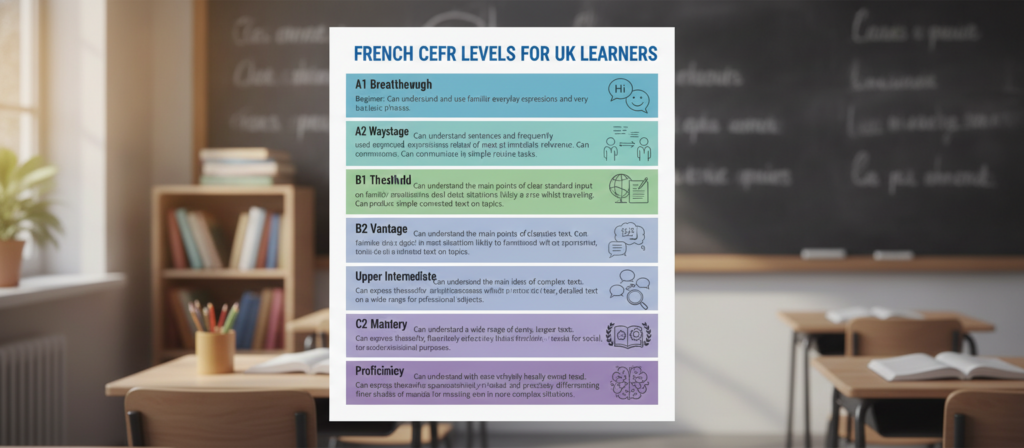
The CEFR framework divides French proficiency into six levels. These are grouped into three broad stages: basic user, independent user and proficient user. Each level develops the abilities associated with the previous one, helping learners progress from simple exchanges to detailed and nuanced communication.
| Stage | Levels Included | Core Abilities | Possible Use Case |
|---|---|---|---|
| Basic user | A1, A2 | Greetings, simple sentences and everyday vocabulary | Basic travel and routine personal interactions |
| Independent user | B1, B2 | Expressing opinions, handling familiar situations and developing fluency | Independent travel, study and some workplace communication |
| Proficient user | C1, C2 | Flexible communication, complex texts and nuanced expression | Advanced academic, professional or personal use |
A1 and A2: Beginner Stages
The A1 French level covers the basics, including greetings, introductions and simple phrases. You may be able to order food, ask straightforward questions and understand slow, clear speech about familiar subjects.
The A2 French level builds on these foundations. You can begin to have short conversations about family, shopping, work and daily life. Both levels support basic communication in predictable situations.
B1 and B2: Intermediate Stages
At the B1 French level, you can discuss familiar topics, briefly explain opinions and handle many common travel situations independently. Your range of grammar and vocabulary also becomes broader.
At the B2 French level, interaction generally becomes more fluent and spontaneous. You can understand detailed arguments, discuss a wider range of subjects and write clear texts. This is commonly regarded as intermediate French or upper-intermediate ability.
C1 and C2: Advanced Stages
The C1 French level indicates an advanced command of French. You can use the language flexibly in many academic, professional and social contexts while understanding implicit or subtle meaning.
The C2 French level represents a very high degree of proficiency. You can understand demanding material, combine information from different sources and express yourself precisely in complex situations. It does not necessarily mean that your French is identical to that of a native speaker.
2. How to Assess Your Level and Choose a Course
Finding your current French level requires more than a guess. Before signing up for classes, follow these steps to assess your skills and choose a course suited to your goals. A little preparation can save time, money and frustration later.
2.1 Step 1: Take a French Level Test
Begin with a reliable French level test or placement assessment aligned with the CEFR scale. The TCF, for example, is an official French proficiency test, while many universities and recognised examination centres offer placement tests for prospective students.
DELF qualifications cover levels A1 to B2, while DALF qualifications cover C1 and C2. These are level-specific diplomas rather than a single test that automatically places every learner on the full CEFR scale.
Short online quizzes can provide a rough initial estimate, but many assess only grammar, vocabulary, reading or listening. A fuller assessment should also consider writing and speaking before you choose a course.

2.2 Step 2: Pinpoint Your Strengths and Weaknesses
After receiving your results, look closely at what they show. A useful French language assessment considers individual skills rather than relying only on an overall score.
You might find that you understand spoken French well but struggle to respond confidently. Alternatively, your vocabulary may be strong while your grammatical accuracy needs work.
Keep a simple record of these patterns. Note recurring errors, hesitations and gaps that appeared during the assessment. This information can help you focus your practice where it is most useful.
2.3 Step 3: Set Achievable Learning Goals
Turn your assessment into clear, measurable goals. Vague aims such as “get better at French” make it difficult to plan your study or recognise progress.
Set specific goals connected to the French proficiency levels you want to reach. For example, an A2 learner might aim to develop the speaking, listening, reading and writing skills associated with B1 by a realistic target date.
If you need French for university, an examination or a job, identify the exact level and qualification required. Your timeframe will depend on factors such as your starting point, study frequency, previous language-learning experience and opportunities to use French.
2.4 Step 4: Select the Right French Course in the UK
With your level and goals established, choose a French course in the UK or an online course that matches your needs. Suitable options vary according to learning style, schedule, budget and the amount of individual feedback required.
University language centres and adult education courses may provide structured group study. Private or live online lessons can offer greater flexibility and personalised attention, particularly for speaking, pronunciation, exam preparation or professional French.
At Your Native Teacher, learners can work online with qualified teachers and receive personalised guidance based on their current CEFR level and goals. Self-study tools can also support vocabulary and grammar practice, but they should not be confused with live lessons that provide interaction and individual feedback.
| Course Type | Best For | Format | Typical Intensity |
|---|---|---|---|
| University Language Courses | Structured study and academic goals | Usually group-based and term-based | Often weekly |
| Adult Education Courses | Social learning and general French | Usually in-person groups | Often one or two sessions per week |
| Private Lessons | Targeted development and personalised feedback | One-to-one, in person or online | Customisable |
| Self-Study Programmes | Independent review and extra practice | On demand | Flexible |
Match the course level, teaching format and amount of feedback to what you identified in Steps 1 to 3. The right fit should challenge you without making the material consistently overwhelming.
3. Conclusion
Understanding French CEFR levels can transform a vague ambition into a clearer learning path with meaningful milestones. It also gives you a practical way to monitor your progress.
Whether you are starting at A1 or aiming for C2, the same principle applies: assess your current ability and then choose lessons or resources suited to that level. This helps you avoid material that is either too basic or unnecessarily difficult.
Learners in the UK can choose from evening classes, university modules, self-study resources and live online lessons. Knowing your level makes it easier to select an option that fits your goals, schedule and preferred way of learning.
Do not rely solely on a guess about where you stand. Take a suitable assessment, review the results honestly and use them to plan your next steps.
Progress comes from understanding your starting point, setting realistic goals and practising consistently. Choose a course built around your specific needs, and make sure it gives you the right balance of structured learning, active communication and useful feedback.