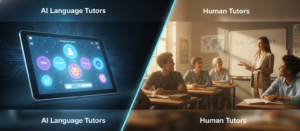




Ever wondered why some people learn new languages faster? Maybe you’ve tried apps, tutors, or classes but felt stuck. The difference often lies in finding the right combination of tools, guidance, and consistent practice—not just natural ability.
Digital education is changing how we learn new skills, including languages. Flexible online lessons, adaptive technology, and interactive resources now give learners more options than traditional textbooks alone.
Artificial intelligence, immersive tools, and flexible schedules are coming together to support more personalised learning. Used thoughtfully, these resources can reduce unnecessary repetition and make regular practice easier.
This change is important because the learning methods you choose can affect your progress. Understanding where digital education is headed helps you make informed choices. The next sections explore trends such as AI conversation tools and virtual immersion, including how they may affect cost, convenience, and retention.
Key Takeaways
- AI-driven personalisation can supplement fixed coursework with more adaptive practice.
- Immersive technology, such as VR and AR, can bring real-world context into practice sessions.
- Digital platforms can blend flexibility with structured progress tracking.
- Cultural depth and meaningful human interaction remain essential, even as tools become more automated.
- Traditional classroom models are evolving alongside flexible, data-informed alternatives.
- Your results depend on consistent practice, appropriate resources, and useful feedback—not technology alone.
1. The Future of Online Language Learning Is Already Taking Shape
You don’t need to wait for a distant breakthrough to see where language education is heading. It is already happening on phones, laptops, and other connected devices.
Learners are combining textbooks with apps and moving from fixed classroom schedules to more flexible study options. This is more than a passing trend: it reflects a broader change in how language skills can be developed, supported by adaptive learning technology and smarter digital tools.
How Technology Is Redefining the Way You Learn
Mobile apps and cloud-based tools have changed how you access learning materials. You no longer need to wait for a scheduled class to practise a new phrase or review vocabulary.
AI language learning tools can track aspects of your progress and adjust content based on your answers. This may mean less time repeating material you already understand and more time working on identified gaps.
Modern language learning platforms can use data-informed insights to suggest a study path based on your activity. However, automated recommendations are most useful when combined with clear goals and, where needed, personalised feedback from a qualified teacher.
Why Traditional Classroom Methods Are Evolving
Classrooms have long played an important role in language education because they offer structure and human interaction. However, rigid timetables and one-size-fits-all curricula do not suit every learner.
Many learners want flexibility, prompt feedback, and more speaking practice than a large group class can provide. Online learning can help address these needs, particularly when it combines useful technology with live interaction.
The comparison below highlights some typical differences, although the quality and features of individual courses can vary.
| Feature | Traditional Group Classroom | Online Digital Learning |
|---|---|---|
| Schedule Flexibility | Usually fixed weekly time slots | Self-study tools may be available on demand |
| Personalisation | Often follows a shared curriculum | Content may adapt to your pace and level |
| Speaking Practice | Shared among class members | Repeatable AI practice or focused live online lessons |
| Feedback Speed | Usually provided during or after class | Automated feedback may be instant; teachers can provide more nuanced guidance |
| Cost Structure | Usually course- or term-based | May be subscription-, course-, or lesson-based |
2. AI-Powered Personalisation Will Influence Your Learning Journey
Artificial intelligence is changing parts of language education. Unlike static textbooks or fixed courses, some AI-powered learning tools can adjust activities according to your answers, study habits, and goals. This can make independent practice feel more personalised, although the quality of the recommendations depends on the system and the data it can interpret.

2.1 Adaptive Learning Algorithms Built Around Your Pace
Adaptive learning algorithms can monitor selected aspects of your activity, such as which words you struggle with, how you respond to grammar exercises, and how often you practise.
- Vocabulary retention patterns and common errors
- Performance in grammar exercises
- Practice frequency and session length
- Areas that may require extra repetition
Using this data, a system may change the difficulty or order of activities. It can provide additional repetition when you make errors and introduce more challenging material as you progress. This does not replace a complete learning plan, but it can make independent practice more responsive to your actual pace.
2.2 Real-Time Feedback and Pronunciation Support at Your Fingertips
Speech-recognition software can identify certain pronunciation features and provide rapid feedback on sounds, word stress, rhythm, or intonation. Its accuracy varies, however, and it may not fully account for acceptable accents, context, or the reason a learner is making a particular error.
Immediate feedback can help you notice and practise specific features before they become habits. In a group classroom, there may be limited time for every student to receive extensive individual pronunciation practice.
AI-powered learning tools can therefore be useful for repetition between lessons. A qualified teacher remains valuable for evaluating intelligibility, explaining how sounds are produced, identifying persistent patterns, and helping you communicate more naturally. At Your Native Teacher, learners can work online with qualified teachers and receive personalised guidance based on their goals.
2.3 AI Conversation Partners for Additional Practice
Practising conversation once meant waiting for class or arranging time with another person. AI conversation partners provide an additional way to rehearse language at convenient times, such as during a lunch break or late in the evening.
- Low-pressure practice when you are still building confidence
- No scheduling conflicts for independent practice
- Repeatable phrases and scenarios
- Simulated dialogues based on everyday situations
These chatbots and voice assistants can simulate common exchanges and give you space to experiment without embarrassment. However, they do not consistently reproduce the spontaneity, cultural awareness, or nuanced feedback of a real conversation. They work best as part of a broader personalised language learning plan that includes human interaction.
3. Immersive Technologies Can Bring You Closer to Real-World Communication
For many learners, living abroad has traditionally been seen as a powerful route to immersion. Today, immersive language learning can bring selected aspects of that experience to a screen or headset.
Knowing vocabulary and grammar is not enough for confident communication. You also need context, repetition, and genuine conversations. Emerging language technology can support some of these needs without requiring a plane ticket.
Virtual Reality Conversations That Simulate Real Situations
Imagine practising how to order food in Paris or take part in a business discussion in Tokyo. Virtual reality language learning can simulate these types of situations.
With a headset, you can enter a digital environment in which a virtual character asks about your order or responds to a presentation.
You respond in real time, and the scenario may react to what you say. This can help you rehearse useful language in context, although it remains a simulation rather than a substitute for interacting with real people.
Gamification Can Support Motivation and Engagement
Boredom and inconsistency can disrupt independent study. Gamified learning attempts to address this by borrowing design elements from games.
Streaks, points, badges, and leaderboards provide visible milestones and short-term goals. Some learners find that these features make study sessions more enjoyable.
This structure can also encourage regular practice. However, maintaining a streak should not become more important than understanding the language or using it meaningfully.
| Immersion Method | Real-World Practice | Flexibility | Typical Cost Level |
|---|---|---|---|
| Living Abroad | Potentially extensive, depending on daily interaction | Low | High due to travel and living costs |
| Traditional Group Classroom | Varies by course | Low | Moderate |
| Virtual Reality Language Learning | Simulated contextual practice | High | Low to moderate, depending on equipment |
| Gamified Language Learning Apps | Usually limited or simulated | Very high | Often low, although subscriptions may apply |
Blending Flexibility with Genuine Cultural Learning
The future of language education can offer both convenience and greater access to authentic materials, but genuine cultural understanding requires more than technology alone.
Curated videos, podcasts, articles, and interactive scenarios let you study on your own schedule. They can expose you to idioms, humour, regional differences, and social conventions, helping you move beyond textbook phrases.
This approach provides structured, repeatable exposure to authentic language. When combined with conversations with qualified teachers or proficient speakers, immersive language learning can become a valuable part of a balanced study plan.
4. Conclusion
The move towards online language learning is already underway, changing how learners begin and continue their language studies.
Adaptive algorithms can adjust practice activities to your performance. AI conversation tools provide repeatable, low-pressure rehearsal. Virtual reality can simulate practical situations, while gamified features may help some learners practise more consistently.
Today’s online language courses can offer a useful mix of flexibility, structured learning, and real-life practice. The strongest approach is often a blended one: use digital tools for convenient repetition and work with a qualified teacher for personalised explanations, meaningful conversation, and feedback that takes your goals and context into account.
You do not need to adopt every new technology or wait for it to become perfect. Choose tools that address a genuine learning need, practise consistently, and make sure automated activities lead to real communication rather than replacing it.