


Struggling to pick the right way to learn Spanish online? You’re not alone.
Many learners across the UK face the same decision. Your choice affects more than convenience—it shapes your schedule, budget, and progress towards practical fluency.
Both options have clear benefits. Some learners value one-to-one guidance, while others prefer the flexibility of a mobile course. This guide gives you an honest, practical comparison.
We’ll walk you through what each learning method offers. You’ll see how they compare in terms of personalisation, speaking practice, cost, and flexibility. We’ll also consider which approach can help you stay motivated over time.
By the end, you’ll have a clearer idea of the best way to learn Spanish for your situation. You might be planning a trip to Barcelona, revising for your GCSE Spanish exam, or developing conversational skills for work. Your goals, budget, and learning style should guide your decision.
Key Takeaways
- Your choice between guided instruction and a self-paced app affects your budget, schedule, and progress.
- Both learning methods have benefits, but the right fit depends on your goals and learning style.
- Personalised feedback is particularly valuable when building speaking confidence.
- Cost and flexibility vary, so compare your options carefully before committing.
- Motivation and consistency matter just as much as the learning method you choose.
- Your specific goal, whether it is travel, exams, or career development, should guide your final decision.
What You Get with a Spanish Tutor vs a Language App
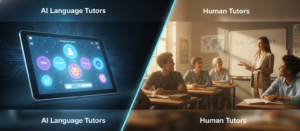
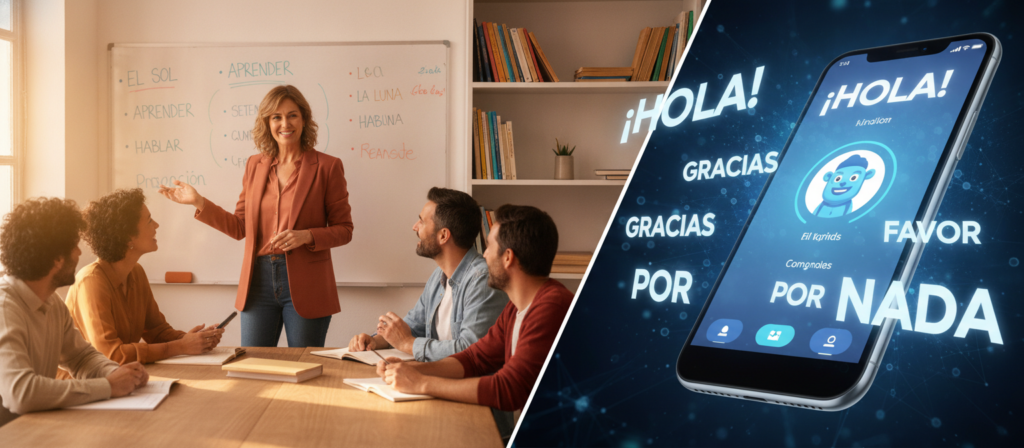
A tutor and an app both aim to help you learn Spanish, but they do so in different ways. Tutors offer personal interaction and immediate feedback. Apps, on the other hand, rely on technology, repetition, and a predetermined structure.
Understanding these differences can help you choose the best fit for your learning needs, budget, and schedule.
How a Spanish Tutor Supports Your Learning
With an online Spanish tutor, you receive live, one-to-one lessons. Your tutor can create a plan based on your current level, goals, interests, and preferred pace. At Your Native Teacher, learners can work online with qualified teachers and receive personalised guidance based on their individual goals.
Make a grammar mistake? Your tutor can correct it immediately and explain why it is wrong. This personalised Spanish lesson approach can evolve as you progress, focusing on areas you find difficult while reinforcing your strengths.
The real-time interaction offered by one-to-one Spanish lessons is especially useful for learners who prefer tailored guidance to a generic curriculum.
How a Language App Supports Your Learning
A Spanish language app usually focuses on structure and repetition rather than extended conversation. Many language-learning apps divide content into short lessons that you can complete in a few minutes.
Some apps use spaced repetition to help you remember words. They may also offer speech-recognition tools for practising pronunciation. Content generally follows a set path, so you always know what to study next.
This self-paced language learning style can suit busy people and beginners who want to establish a daily study habit. However, apps work best as supplementary practice rather than a replacement for live conversation and personalised feedback.
Spanish Tutor vs App: Comparing the Key Factors
There are important differences between learning with a tutor and using an app. These can influence how effectively you develop your Spanish. Some factors are particularly relevant when preparing for an exam, while others matter more if you are travelling to Spain, moving abroad, or using Spanish at work.

| Factor | Spanish Tutor | Language App |
|---|---|---|
| Personalisation | Lessons can adapt to your needs and knowledge gaps | Content usually follows a fixed or algorithm-led path |
| Speaking Practice | Live conversation, feedback, and correction | Speech recognition and short exercises, with limited dialogue |
| Cost | Varies by teacher, lesson length, and level of support | Free or subscription-based, depending on the app |
| Flexibility | Requires scheduling | Available at any time without booking |
| Accountability | Regular lessons and structured check-ins | Self-directed and easier to postpone |
Personalisation and Learning Pace
A tutor can adapt lessons to your needs. If you are struggling with the subjunctive, for example, they can adjust the lesson plan and spend more time explaining and practising it.
Apps generally follow a set path. This works for some learners, but not for everyone. Beginners may find certain sections too fast, while learners with some existing Spanish may find them repetitive.
With an app, you may repeat material you already know or move past a topic before fully understanding it. A tutor can focus lesson time on the knowledge and skills you most need to develop.
Speaking Practice and Real-World Confidence
Speaking with a tutor is different from responding to prompts in an app. A teacher can correct you as you speak and provide targeted guidance on pronunciation, vocabulary, grammar, and sentence structure.
This practice can help you become more confident in real-life situations, such as ordering food in Spain, taking part in a workplace conversation, or speaking with Spanish-speaking friends and family.
Some apps include useful speech-recognition tools, but these cannot fully reproduce human interaction. The spontaneous back-and-forth of a real conversation is essential for developing listening skills, natural responses, and speaking confidence.
Cost and Long-Term Value
Many apps offer free versions or paid subscriptions, making them an accessible starting point for casual learners. Features and subscription costs vary between providers.
Live private lessons generally cost more because they include a teacher’s time, preparation, and personalised feedback. Prices vary according to factors such as lesson length, the teacher’s qualifications, and the type of support provided.
The value of tutoring depends on your goals. Personalised guidance can be particularly useful if you are preparing for an exam, need Spanish for work, or have a specific deadline. Apps may offer better value for short, independent vocabulary and grammar practice.
Flexibility and Convenience
Apps are convenient because you can practise at any time, including during a lunch break or while travelling, without making a booking.
Tutors require scheduling, so you need to arrange lessons around your availability and the teacher’s timetable.
However, a scheduled lesson can provide focused practice and reduce the time spent reviewing irrelevant material. The better option depends on whether you value complete flexibility or personalised, structured support.
Accountability and Motivation
A tutor can help keep you on track by setting suitable tasks, reviewing your progress, and providing encouragement. This structure can make it easier to remain consistent when life gets busy.
Apps can also support consistency through reminders and short daily activities, but learners are responsible for maintaining their own routine.
Regular lessons can add structure to long-term learning, while an app can make it easier to practise between sessions. Whichever method you choose, realistic goals and a sustainable routine are important.
Conclusion
What do you need Spanish for? If you want to communicate effectively for work, relocation, exams, or family life, a tutor is often the stronger option. Live lessons provide personalised feedback and opportunities to practise speaking with another person.
If you are learning independently, have a limited budget, and do not have an urgent goal, an app can provide convenient vocabulary and grammar practice. It can also help you establish a regular learning habit.
Many learners benefit from combining both methods. You can use an app or another self-study tool for short daily exercises and work with a qualified Spanish teacher for conversation, correction, and structured guidance.
Choose based on your budget, schedule, current level, and goals. Consistency matters, but so does the quality of your practice. A sustainable plan that includes regular speaking and useful feedback will give you the best foundation for long-term progress.