



Ever looked at a long word with lots of consonants and thought, “How do people remember this?” Many English speakers feel this way before they start learning German, especially when they hear native speakers talking quickly.
The idea of learning German might seem daunting at first, but the reality is more encouraging. Beginners often find the grammar and sounds tricky.
However, once you begin to understand the main grammar patterns, you can make steady progress. Pronunciation may still be a hurdle, but regular practice makes it more manageable.
German is widely studied in schools, universities and adult education courses. With consistent effort and an effective learning plan, learners can develop strong practical skills.
This guide will help you understand the main challenges. It then offers a clear, step-by-step method for building your confidence and fluency. Keep reading to find out how to make German easier with the right approach. You’ll leave with a practical plan and the motivation to start.
Key Takeaways
- German has a reputation for tricky grammar, but the challenge becomes manageable with steady practice.
- Long compound words and unusual word order often surprise English speakers at first.
- Learners around the world study German successfully at school, university and independently.
- Pronunciation improves as you become familiar with common sound patterns.
- A clear, structured approach is usually more effective than random study methods.
- This guide covers specific challenges and provides a step-by-step plan for building fluency.
- Consistent practice each week builds confidence more effectively than occasional cramming sessions.
Is German Hard to Learn? Breaking Down the Challenges
Learning German can be challenging, but it is far from impossible. Many learners struggle with grammar, pronunciation and vocabulary. Understanding these challenges can make the learning process easier.
Grammar Rules That Trip Up Beginners
German grammar can confuse beginners. It has four cases: nominative, accusative, dative and genitive. These cases affect articles, adjectives, pronouns and the roles words play in sentences.
Every noun has a grammatical gender: der (masculine), die (feminine) or das (neuter). Adjective endings also change according to factors such as gender, number, case and article type. With practice, you will begin to recognise recurring patterns.
Pronunciation and Sentence Structure Quirks
German pronunciation includes sounds that may be unfamiliar to English speakers. Umlauts such as ä, ö and ü represent distinct vowel sounds. The “ch” sound, heard in words such as “ich” and “Bach,” also requires practice because its pronunciation varies according to the surrounding sounds.
German sentence structure differs from English in several ways. For example, conjugated verbs take the second position in many main clauses, while verbs can appear at the end of subordinate clauses. Your ear will gradually become accustomed to these patterns through regular listening.
Vocabulary Overlap with English
German vocabulary is often more familiar than learners expect. English and German share many related words, or cognates. Examples include “Haus” (house), “Wasser” (water) and “Freund” (friend).
This shared linguistic history gives English speakers a useful starting point, although learners should also watch out for false friends: words that look similar but have different meanings.
How to Learn German Faster: A Step-by-Step Approach
Learning German can be easier than you think when you follow a structured plan. Instead of jumping between unrelated topics, use a clear path that develops your skills step by step. This five-step plan is a practical guide you can start using today.
Step 1: Start with High-Frequency Words and Phrases
Focus on common words and phrases you will use every day. Greetings, numbers, question words and basic verbs are useful foundations for everyday communication.
Learning these items first helps you start forming sentences sooner. Words such as “haben” (to have), “sein” (to be) and “können” (can or to be able to) appear frequently in real conversations.
Mastering these basics allows you to make simple sentences early in your studies. This initial success can boost your motivation and show you that progress is possible.
Step 2: Practice Pronunciation Every Day
Practise German pronunciation daily, even if you only have ten minutes. English speakers often need extra practice with sounds such as the umlauts ä, ö and ü, as well as the different ways German speakers pronounce the letter “r.”
Pronunciation videos, audio dictionaries and language-learning apps can help you listen and repeat. These resources are useful supplements, but personalised feedback from a qualified teacher can help you identify errors that are difficult to notice on your own.
Recording yourself and comparing your speech with clear native-speaker audio can reveal areas that need attention. Short, regular practice is generally more effective for building habits than occasional long sessions.
Step 3: Learn Grammar Through Context, Not Memorisation
Learn German grammar by seeing it in use rather than relying only on memorised rules. Reading simple stories or watching subtitled videos shows how grammar works in complete sentences.
Seeing grammar patterns in different examples helps you understand how they communicate meaning. A teacher can also explain confusing structures and provide exercises based on your level and goals.
With time and repeated practice, many common structures begin to feel more natural rather than forced from a rulebook.
Step 4: Immerse Yourself in German Media
You do not need to travel to a German-speaking country to immerse yourself in the language. German-language television programmes and films can provide authentic dialogue and cultural context.
Learner-friendly podcasts, news services and educational videos are available for a range of skill levels. Listening to German music offers another enjoyable way to become familiar with the language.
This regular exposure helps you adjust to the rhythm, pronunciation and word order of German, making real conversations feel less intimidating.
Step 5: Use Spaced Repetition and Consistent Review
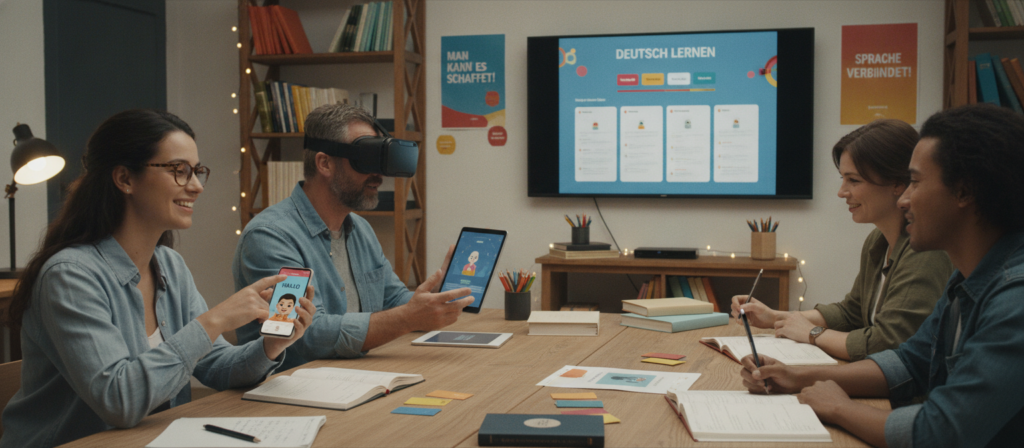
Cramming vocabulary rarely produces lasting results. Spaced repetition helps you review words at increasing intervals, supporting long-term retention.
Flashcard and vocabulary apps can schedule reviews based on how well you remember each item. Use these tools to supplement meaningful reading, listening, writing and speaking practice rather than treating them as a complete learning programme.
| Tool | Best For | Key Feature |
|---|---|---|
| Spaced-repetition flashcards | Vocabulary retention | Scheduled reviews and custom vocabulary sets |
| Language-learning apps | Daily practice habits | Short activities with built-in review |
| Learner-friendly news and media | Listening and reading skills | Level-appropriate content with audio or transcripts |
Sticking with short, consistent review sessions each week strengthens memory more effectively than cramming. Follow all five steps, and your progress should feel steadier and more achievable.
Conclusion
Learning German can be challenging, with cases, gender and word order to master. However, English speakers have the advantage of encountering many familiar word roots and some recognisable language patterns.
Do not wait until you understand every rule before using the language. Practise regularly, start with common words, work on pronunciation and learn grammar through complete sentences.
Make German part of your daily life by watching programmes, listening to music or following podcasts. Use spaced repetition to keep new words fresh in your memory. These small steps add up over time.
Your journey to learn German does not have to be intimidating. Choose one tip and start today. Consistent, purposeful effort matters more than trying to be perfect. If you want structured speaking practice and personalised feedback, Your Native Teacher offers live online lessons with qualified teachers who can adapt the learning plan to your goals.