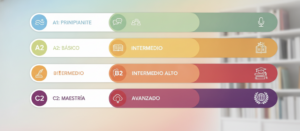




At B2 level, you can already communicate independently in English. Reaching C1 means developing the fluency, precision, and flexibility needed to handle more complex situations with confidence.
Moving up the CEFR levels might seem like a big jump, but it is achievable. You already know a great deal; now it is time to use that knowledge more naturally and accurately.
At this advanced stage, you can communicate confidently in many professional settings, understand complex discussions, and write clearly for different purposes.
With regular practice and the right methods, you can make steady progress toward this goal. This guide explains how to improve your skills, stay motivated, and work effectively toward C1 English.
Key Takeaways
- Moving up the CEFR scale means gaining fluency, precision, and confidence in real conversations.
- The advanced level focuses on expressing ideas naturally, with minimal hesitation while searching for words.
- You already have a solid foundation—the next stage builds on skills you have already developed.
- Consistent practice, not talent alone, drives meaningful progress toward advanced proficiency.
- Clear strategies and a structured roadmap make this transition more manageable.
- Small daily habits can create lasting improvement in listening, speaking, reading, and writing.
1. Understanding What It Takes to Move From B2 to C1 English
Many learners ask what makes a B2 speaker different from a C1 English user. It is not just about knowing more words or complex grammar. It is about using the language naturally, accurately, and confidently in a wide range of situations.
The CEFR levels describe B2 learners as independent users. At the C1 English level, learners can use English fluently and flexibly for social, academic, and professional purposes. They can discuss complex topics, understand implicit meaning, and adjust their language for different audiences and contexts.
- Vocabulary depth—using precise, nuanced words instead of relying on general ones
- Grammar complexity—using a broad range of structures with a high degree of accuracy
- Listening comprehension—following extended, natural speech and identifying implied meaning
- Speaking fluency—expressing ideas smoothly with limited hesitation
- Writing sophistication—organising complex ideas clearly and adapting style to the task
| Skill Area | B2 Level | C1 English Level |
|---|---|---|
| Vocabulary | Handles everyday subjects and many general topics | Uses nuanced, idiomatic, and subject-specific language appropriately |
| Grammar | Generally accurate, although some errors remain | Uses complex structures with a high degree of accuracy |
| Listening | Understands the main ideas of clear standard speech | Follows extended natural speech, including implied meaning |
| Speaking | Communicates comfortably but may sometimes hesitate | Speaks fluently and develops complex ideas clearly |
This change takes time, but regular, focused effort leads to progress. Understanding the differences between the two levels helps you identify what to work on next.
2. A Step-by-Step Guide to Go From B2 to C1 English
The following six steps can help you work toward C1 English proficiency. Each one builds on your existing skills and makes your practice more focused.
2.1 Assess Your Current Level and Set Clear Goals
Start by identifying your current strengths and weaknesses. A reliable placement test can provide a useful snapshot of your skills, although it may not measure every aspect of your English.
You can also use CEFR self-assessment checklists to review what you can currently do, such as following a lecture, contributing to a detailed discussion, or writing a structured report.
Once you know your starting point, set clear goals. You might want to prepare for the Cambridge C1 Advanced exam, work toward an IELTS score required by a university, or become more confident when leading meetings in English. Specific, relevant goals make it easier to choose suitable practice activities and monitor your progress.
2.2 Expand Your Vocabulary With Advanced and Nuanced Words
To develop your advanced English vocabulary, learn how words are commonly used together. For example, study the phrase “reach a consensus” rather than memorising each word separately.
Organise new vocabulary by theme, such as business, health, education, or technology. This helps you learn language you are likely to use. Idioms can also be useful, but you should learn their context and level of formality before using them.
Spaced-repetition vocabulary apps can help you review new words at useful intervals. Combine this type of review with reading, listening, writing, and speaking so that you learn to use the vocabulary in context.
2.3 Master Complex Grammar Structures
C1 English requires more than knowledge of the main verb tenses. You need to use grammar flexibly to express emphasis, contrast, uncertainty, and relationships between complex ideas. Structures such as inversion—for example, “Rarely have I seen such dedication”—can be useful when the context and style are appropriate.
Mixed conditionals, cleft sentences, and advanced passive constructions can also help you express detailed ideas. However, the goal is not to make every sentence complicated. Effective C1 grammar is accurate, varied, and suitable for the situation.
Use a reliable advanced grammar reference together with targeted exercises. Then apply each structure in your own speaking and writing and seek feedback on whether it sounds natural.

2.4 Sharpen Your Listening Skills With Authentic Content
Textbook audio can be helpful, but it should not be your only source of listening practice. To improve your English listening skills, include authentic content created for fluent English users.
Podcasts, talks, television programmes, interviews, and news broadcasts expose you to natural pacing, connected speech, and a range of vocabulary. Choose material from different regions and speakers so that you become familiar with more than one accent.
- Listen once for the general meaning, then again for details.
- Pause and repeat useful or unfamiliar phrases aloud.
- Use English subtitles or a transcript first, then listen again without them.
- Summarise what you heard to check your understanding.
2.5 Practice Speaking for Fluency and Confidence
Improving your English speaking fluency requires frequent practice, even when speaking feels difficult at first. Language-exchange conversations can provide informal practice, while structured lessons can help you address recurring mistakes and work toward specific goals.
Shadowing—repeating what a speaker says almost simultaneously—can improve rhythm, pronunciation, and awareness of connected speech. Recording yourself and listening back can also help you notice hesitation, unclear pronunciation, and repeated vocabulary.
Personalised feedback is particularly valuable at this level because learners do not always notice their own errors. At Your Native Teacher, learners can work online with qualified teachers and receive guidance based on their speaking, writing, exam, or professional communication goals.
Over time, regular speaking and targeted feedback can reduce hesitation and help you express complex ideas more naturally—an important part of C1 English proficiency.
2.6 Strengthen Your Writing for Academic and Professional Contexts
At C1 level, your English writing skills should allow you to produce clear, well-structured texts on complex subjects. Practise different formats, such as essays, reports, proposals, formal emails, and opinion pieces.
Use cohesive devices such as “furthermore,” “however,” and “on the other hand” where they genuinely clarify the relationship between ideas. Avoid adding linking words mechanically, and choose precise vocabulary that suits the audience and purpose.
After writing, review your organisation, tone, grammar, and word choice. Feedback from a qualified teacher can help you identify patterns that spelling and grammar checkers may miss.
3. Tips to Stay Motivated on Your Journey to C1 English
Even dedicated learners experience periods when motivation declines. The journey from B2 to C1 English is not always smooth, and staying motivated while learning English often depends on maintaining small, consistent habits.
3.1 Track Your Progress Regularly
Keep a simple learning journal to record useful phrases, corrected mistakes, and tasks that are becoming easier. Take an appropriate practice test periodically if you are preparing for an exam. You can also compare recordings or writing samples from different months to see changes that may be difficult to notice from day to day.
Some learning tools include progress trackers, but practical evidence—such as handling a longer conversation or writing a clearer report—can be more meaningful than a score or activity streak.
3.2 Immerse Yourself in English Every Day
English immersion does not require moving abroad. You can switch your phone’s language to English, listen to podcasts, read English-language news, or follow content related to your work and interests.
These small habits create steady exposure. They help advanced English learners become more familiar with natural rhythm, vocabulary, and sentence patterns.
3.3 Celebrate Small Wins Along the Way
Give yourself credit for small victories, such as understanding a podcast episode without a transcript, contributing confidently to a meeting, or correcting a recurring grammar error. Recognising these moments can help you maintain motivation during a long-term learning process.
4. Conclusion
Moving from B2 to C1 English takes time. It requires regular practice with a clear purpose, particularly when progress feels slow.
Every useful phrase you learn and every skill you practise can move you closer to C1 English proficiency. Advanced English can support your career, education, and ability to communicate in complex situations.
Your journey will not be identical to anyone else’s. Some skills may improve quickly, while others require more focused work. Periods of visible progress and temporary plateaus are both normal.
Consistency is important. Keep listening to varied English, read demanding texts, write for different purposes, and speak even when you might make mistakes. Combine independent practice with personalised feedback when you need help identifying your next steps.
You now have a roadmap showing which skills to focus on and how to maintain your motivation. Choose one strategy from this guide and apply it consistently this week. Progress toward C1 is built one focused practice session at a time.