



Has your team ever struggled during a German-language client call?
This is a common challenge for companies looking to expand into Germany, Austria and Switzerland. Language barriers can slow negotiations, weaken trust and create costly misunderstandings.
Greater fluency can make a meaningful difference. When employees can present, negotiate and build rapport in German, they are better equipped to develop strong professional relationships.
This guide explains how corporate German language courses can add value to your organisation. You’ll learn why structured, teacher-led instruction can be more effective than relying on self-study alone, how to fit workplace German lessons into busy schedules and how to turn an idea into a practical training programme.
Whether you work in HR, lead a department or own a company, you’ll find a clear plan for creating language training that supports your team’s goals.
Key Takeaways
- Language barriers can affect business relationships with German-speaking clients and partners.
- Corporate German language courses can help organisations communicate more effectively in German-speaking markets.
- Structured workplace German lessons provide guidance, feedback and opportunities for relevant speaking practice.
- A well-designed programme can fit around busy work schedules without unnecessarily disrupting daily operations.
- Stronger communication skills can support smoother negotiations and reduce misunderstandings.
- This guide provides a step-by-step roadmap for planning and launching employee training.
Why Business German Training for Employees Matters
Strong German communication skills can support success in Germany, Austria and German-speaking parts of Switzerland. When employees can speak, write and negotiate in German, they can communicate more directly with clients, colleagues and partners.
Clear communication influences how clients and partners perceive a business. A well-chosen phrase can build trust, while an inaccurate translation can create confusion or doubt.
Employees who participate in structured corporate language learning can become better prepared to discuss projects, answer questions and manage professional relationships without relying constantly on translation.
Learning German can also increase confidence. Employees who complete employee language training programmes may feel more comfortable contributing during meetings, calls and presentations.
Written communication can improve as well. Clear emails, reports and other business documents demonstrate professionalism and help reduce misunderstandings. Important legal documents and contracts should still be reviewed by appropriately qualified professionals when necessary.
German business etiquette is another useful part of workplace training. Although expectations vary by organisation and individual, German-speaking professional environments often place importance on:
- Precision in scheduling, reporting and follow-through
- Directness in feedback and decision-making conversations
- Formality in titles, greetings and written communication
- Punctuality as a sign of respect and reliability
Training that combines language with cultural awareness can help employees communicate more appropriately. This approach is generally more useful than memorising vocabulary without context.
Companies that support German fluency for employees may see benefits across several areas. The table below shows potential differences between unstructured learning and a planned training programme.
| Business Area | Without Structured Training | With Business German Training |
|---|---|---|
| Client Communication | Greater risk of misunderstandings and slower trust-building | More confident exchanges and clearer relationship development |
| Employee Confidence | Possible hesitation in meetings and presentations | More opportunities for active participation and guided practice |
| Onboarding for International Hires | More clarification may be needed | Language support tailored to the working environment |
| Employee Development | Language growth depends largely on individual initiative | Clear goals, feedback and measurable learning milestones |
The exact results will depend on factors such as employees’ starting levels, attendance, opportunities to use German and the quality of the programme.
How to Set Up Business German Training for Employees: A Step-by-Step Guide
Starting a language training programme requires a clear plan. Companies should define their needs, select an appropriate format and review progress regularly. The following steps can help you create training that is relevant to employees’ work.
1. Assess Your Employees’ Current German Proficiency
Before choosing materials or setting a schedule, determine each employee’s current level. A suitable German proficiency assessment should evaluate the skills relevant to the learner’s role.
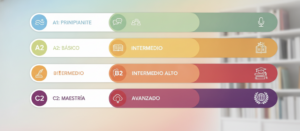
The CEFR German levels, from A1 to C2, provide a widely used framework for describing language ability. They can help employers set realistic objectives and group learners with similar needs.
- Use written and spoken assessments where both skills are relevant
- Group employees by level and learning needs
- Identify specific gaps in speaking, listening, reading or writing
2. Set Clear Business Language Goals
Once you know where your team is starting, define what successful training should achieve. A goal such as “improve German skills” is too broad to guide a useful programme.
Instead, focus on specific, job-related outcomes. An employee who works with German-speaking clients might need stronger business German vocabulary for presentations and negotiations. A customer support employee may need to understand questions and respond clearly on the phone.
Connect learning goals to daily responsibilities. This makes the training more relevant and can help employees stay motivated as they develop their German for international business skills.
3. Choose the Right Training Format
Training formats should reflect employees’ schedules, locations, roles and learning needs. Some teams benefit from in-person classes, while distributed teams may need live online lessons. Self-paced resources can support either format, but they do not provide the same personalised correction and speaking practice as a qualified teacher.
Blended German learning programmes combine live teaching with independent online exercises. This can work well for busy employees who need both structure and flexibility.
| Training Format | Best For | Scheduling Flexibility | Relative Investment |
|---|---|---|---|
| In-Person Classes | Teams in one location that need guided group practice | Low to medium | Medium to high |
| Blended German Learning | Employees balancing work and study | Medium to high | Medium |
| Self-Paced E-Learning | Independent review and supplementary practice | High | Low |
| One-to-One German Language Coaching | Employees needing personalised, role-specific support | High | Medium to high |
For companies seeking live online training, Your Native Teacher offers lessons with qualified teachers who can adapt speaking practice, vocabulary and feedback to employees’ professional goals.
4. Select Tools and Resources for Business German Training
The right German training tools can support progress between lessons. Look for resources that reinforce speaking, listening, grammar and industry-specific vocabulary rather than relying on passive study alone.
Companies may use business German e-learning resources to assign practice and monitor participation. These tools are most effective when they supplement structured teaching, personalised feedback and real communication.
- Vocabulary or spaced-repetition tools for short daily practice
- Video-conferencing tools for live lessons and coaching sessions
- Assessment materials aligned with relevant proficiency goals
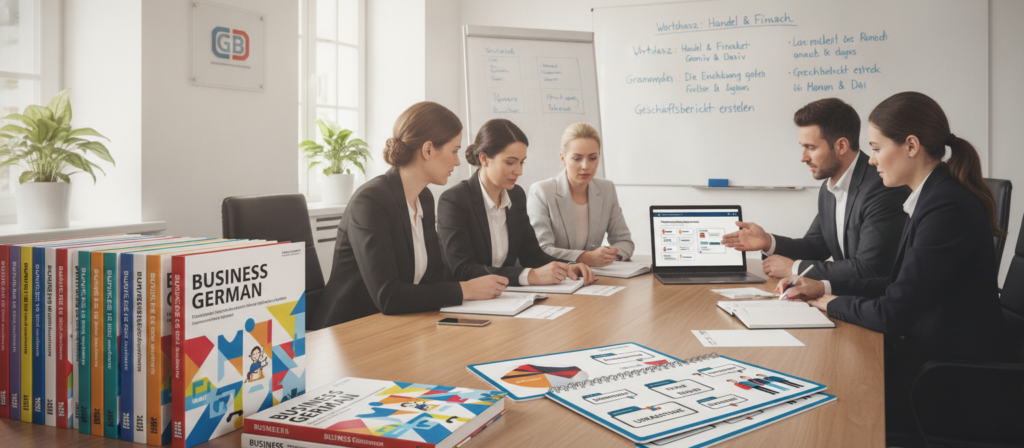
- Workbooks focused on emails, meetings, presentations and negotiations
5. Integrate Real-World Business Scenarios and Vocabulary
General textbook German may not fully reflect an employee’s daily work. Training should include actual job tasks to build practical confidence and competence.
Use German business scenarios such as client calls, project updates, negotiations and team meetings. Role-playing these situations allows employees to apply new vocabulary and receive feedback in a controlled environment.
This method can develop workplace communication skills more directly than generic exercises alone. Employees practise asking for clarification, responding professionally and communicating under realistic conditions.
6. Track Progress and Provide Ongoing Support
Language development does not stop after one course. Regular reviews help employers measure progress and adjust the programme when employees’ roles or needs change.
Possible indicators include assessment results, participation in German-language meetings, completion of role-specific tasks and employee self-evaluations. These measures can contribute to an evaluation of German training ROI, although business outcomes may also be influenced by many other factors.
Provide ongoing support through refresher lessons, coaching sessions, guided independent practice or peer conversation groups. Consistent reinforcement helps employees retain their skills and shows that language development is part of the organisation’s wider talent strategy.
Conclusion
Stronger German communication skills can support international business relationships and reduce reliance on translation and guesswork. With well-planned Business German training, employees can become better prepared to negotiate, present and build trust with German-speaking partners.
Language skills require regular practice. Treat corporate German language courses as an ongoing part of employee development rather than a one-off activity. Relevant lessons, independent review and real-world application can help employees maintain and extend what they learn.
To get started, assess your team’s current skills and define what successful communication means for each role. Then select a training format that fits your working arrangements and provides the appropriate balance of live instruction and independent practice.
Support employees with suitable materials, connect lessons to genuine job tasks and review progress regularly. A structured programme with qualified teaching and personalised feedback can help your workforce represent the company more confidently in important German-language conversations.
FAQ
How long does it typically take for employees to become proficient in Business German?
There is no single timeline. Progress depends on the employee’s starting level, target skills, lesson frequency, independent study and opportunities to use German at work. Moving from beginner ability to confident professional communication generally requires sustained study rather than a short course.
An initial assessment can help a teacher set realistic milestones for each employee. Regular lessons combined with relevant workplace practice usually provide a stronger foundation than occasional study.
What CEFR level should employees reach for effective business communication in German?
The appropriate level depends on the role. B1 may support routine interactions in familiar situations, while B2 is a useful target for many roles involving meetings, presentations and detailed professional discussions. Highly complex work may require C1 ability and specialist knowledge.
CEFR level alone does not guarantee workplace readiness. Employees should also practise the vocabulary, tasks and communication styles required in their jobs.
Should we prioritise in-person training or online Business German courses?
Both formats can be effective. The right choice depends on your team’s location, schedule, learning goals and access to qualified teachers. In-person lessons can suit teams based in one office, while live online lessons provide flexibility for remote or international employees.
A blended approach can combine live teacher-led instruction with independent exercises. Make sure that “online training” includes interaction and personalised feedback when speaking development is a priority.
Are there recognised certifications employees can earn through Business German training?
Employees can take established German proficiency examinations, including exams aligned with CEFR levels. Some examinations focus on general language ability, while others have professional or academic applications.
Before choosing an exam, confirm that it is relevant to the employee’s role and recognised by the organisation or institution that requires it. Training providers may prepare learners for an exam, but certificates are normally issued by the relevant examining body.
How much should companies budget for Business German training programmes?
Budgets vary according to the number of employees, programme length, group size, lesson frequency, teacher qualifications, level of personalisation and whether specialist materials are required. One-to-one coaching usually requires a higher per-employee investment than group training, while self-study tools are less expensive but provide less direct support.
Request a proposal based on your team’s actual levels and goals rather than relying on a broad annual estimate. The budget should also account for assessment, progress reviews, materials and employees’ study time.
What business scenarios should the training curriculum include?
The curriculum should reflect situations employees genuinely encounter. These may include writing emails, joining video calls, giving project updates, handling customer questions, delivering presentations and negotiating terms.
Role-playing relevant scenarios helps employees apply vocabulary and communication strategies. Teachers can then provide targeted feedback on clarity, accuracy, tone and cultural appropriateness.
How do we measure whether the training programme is working?
Use both formal assessments and practical evidence. Periodic language assessments can show progress in specific skills, while feedback from employees, managers, clients or colleagues can indicate whether communication is improving in real situations.
Relevant measures may include greater participation in meetings, successful completion of role-specific tasks, fewer avoidable requests for translation and increased confidence. Set baseline measures before training so that later comparisons are meaningful.
Is it worth training employees who already have some knowledge of German?
Yes. Employees with general German knowledge may still need help with professional vocabulary, formal writing, presentations, negotiations or industry-specific communication.
An assessment can identify gaps and prevent employees from repeating material they have already mastered. Their training can then focus on the situations most relevant to their work.
What ongoing support should companies provide after initial training concludes?
Employees can maintain their skills through refresher lessons, guided conversation groups, relevant German-language publications and opportunities to contribute to German-language projects. Continued access to vocabulary apps or other practice tools can provide supplementary review.
Periodic assessments and teacher-led coaching can identify skills that need further development. Ongoing support is especially important when employees do not use German regularly in their daily work.