



Why do some UK learners make steady progress in German while others struggle to stay motivated? The course format they choose can make a significant difference.
You face many options: self-study apps, private teachers, structured lessons and courses from established institutions. Not every option will fit your lifestyle, budget or goals, so it is worth considering what you need before committing your time and money.
This guide explains how to learn German online with a clear plan. It begins with the factors you should consider before choosing a course.
We’ll compare live lessons from Your Native Teacher with supplementary resources such as Babbel, Goethe-Institut courses and DW Learn German. You’ll see how these options can support adults in the UK who are learning for exams, work, travel or everyday conversation. The right combination of qualified teaching and independent practice can make your goals easier to reach.
Key Takeaways
- Not all language courses deliver the same experience—your choice should match your budget, schedule and goals.
- Live online lessons provide speaking practice, personalised guidance and immediate feedback.
- Self-paced apps suit busy schedules but may not provide enough speaking practice or individual support on their own.
- Courses and exams from established institutions may be appropriate when you need formal certification.
- Matching your course to a specific goal, whether it is conversation, travel, business or exam preparation, can save time and money.
What to Look for Before Choosing Online German Lessons
With so many platforms promising fast progress, finding the right German lessons is important. Look for a programme that balances cost, scheduling, teaching quality and your long-term goals. Do not choose the most eye-catching app without considering what you genuinely need.
Cost and Value for Money
Online German courses range from inexpensive self-study subscriptions to more comprehensive teacher-led programmes. A low price does not always represent better value, particularly if the course does not include feedback or speaking practice.
Check the lesson length, teacher qualifications, curriculum, level of personalisation and quality of feedback. The best value often comes from a course that meets your needs and keeps you motivated enough to continue.
Flexibility and Lesson Format
Adult learners often have busy lives, which can make rigid class schedules difficult to maintain. Flexible German classes can help you fit learning around work and family commitments.
Think about whether you prefer self-paced study, group sessions or one-to-one lessons. Each format suits different needs. Choose what fits your actual schedule rather than an idealised routine that may be difficult to sustain.
Teacher Quality and Personalised Feedback
If you choose live lessons, look for qualified teachers who can explain grammar clearly, correct recurring mistakes and adapt lessons to your goals. Regular feedback is particularly valuable for pronunciation, writing, professional communication and exam preparation.
Certification and Recognised Qualifications
If you need proof of proficiency for university, immigration or employment, look for a German certification course or an exam-preparation programme aligned with the relevant CEFR level.
Course completion and official certification are not always the same thing. Check which examination your institution or authority accepts, where it must be taken and whether a separate exam booking is required. For travel or personal learning, formal accreditation may not be necessary.
Comparing the Best Online German Lessons Adults Can Take in the UK
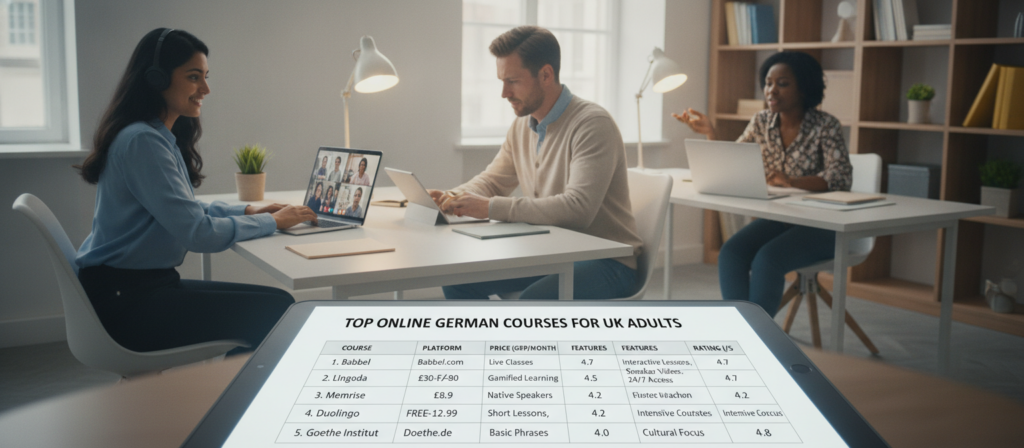
Online German courses vary considerably. Some provide personalised teaching, while others focus on independent study or preparation for recognised examinations. The options below represent different ways for UK learners to study online.
Understanding these differences will help you find a suitable combination for your budget, schedule and learning style.
Your Native Teacher
Your Native Teacher offers live online German lessons with qualified teachers. Learners can receive personalised guidance based on their current level, schedule and objectives, including conversational German, business communication and exam preparation.
One-to-one instruction is especially useful when you need regular speaking practice, clear explanations and feedback on mistakes. A teacher can also adjust the pace and lesson content as your needs change.
- Pros: live instruction, personalised feedback, flexible online learning and lessons adapted to individual goals
- Cons: requires scheduled attendance and costs more than independent self-study resources
- Best for: learners who want structured progress, speaking practice and individual support
Babbel
Babbel is a German language app for learners who prefer to study independently. Its short lessons can make it easier to fit vocabulary and grammar practice into a busy routine.
The app can provide useful supplementary practice, particularly for beginners and lower-intermediate learners. However, it does not replace personalised correction or sustained conversation with a qualified teacher.
- Pros: short self-paced lessons, accessible interface and grammar practice
- Cons: limited personalised feedback and less spontaneous speaking practice than live lessons
- Best for: independent practice alongside a broader learning plan
Goethe-Institut Online Courses
The Goethe-Institut offers German courses linked to CEFR proficiency levels and is also known for its German-language examinations. Its courses may suit learners who prefer an institution-based curriculum or who are working towards a recognised exam.
If you need certification for university, immigration or professional purposes, confirm the exact certificate accepted by the relevant organisation. An online course may prepare you for an examination without automatically awarding the required qualification.
- Pros: CEFR-aligned learning, established institutional experience and relevant exam-preparation options
- Cons: course schedules may be less flexible than independent study, and examinations may require separate registration
- Best for: learners seeking an institution-based course or preparation for a recognised German exam
DW Learn German
DW Learn German is provided by Deutsche Welle, Germany’s international broadcaster, and offers free learning materials. These include videos, audio programmes and interactive exercises across multiple proficiency levels.
It works well as a supplement to live lessons or as a starting point for exploring the language. Self-motivation is important because there is no dedicated teacher providing individual feedback or accountability.
- Pros: free multimedia content covering several levels
- Cons: requires self-discipline and does not provide personalised correction
- Best for: learners seeking supplementary listening, vocabulary and grammar practice
| Option | Best For | Cost Type | Format |
|---|---|---|---|
| Your Native Teacher | Personalised progress and speaking practice | Paid lessons | Live online lessons with qualified teachers |
| Babbel | Independent supplementary practice | Subscription | App-based lessons |
| Goethe-Institut | Institution-based study and exam preparation | Varies by course and exam | Structured courses |
| DW Learn German | Free supplementary study | Free | Multimedia self-study |
Matching a Course to Your Learning Goals
Not every German course fits every objective. Your reason for learning should guide your choice more than price or popularity alone. Once you have identified your goal, you can select a format that supports it.
Starting From Scratch
If you are just starting, look for German for beginners lessons that introduce essential grammar and vocabulary without overwhelming you. A self-study app or DW Learn German can help you practise between lessons. Live guidance can also establish good pronunciation habits and resolve confusion before mistakes become ingrained.
Business and Professional German
Professionals who need German for work often benefit from personalised instruction rather than relying exclusively on apps. At Your Native Teacher, lessons can be adapted to relevant tasks such as meetings, presentations, formal emails, negotiations and industry-specific vocabulary.
A focused business German course should reflect the situations you actually encounter, whether you work with German-speaking clients, collaborate with international colleagues or are preparing to relocate.
Preparing for Official Exams
Anyone pursuing university admission, immigration or professional recognition should first identify the exact examination and proficiency level required. Effective German exam preparation should cover the relevant format, timing and language skills rather than general German alone.
Institutional preparation courses can provide a structured syllabus, while personalised lessons can target individual weaknesses in speaking, writing, listening or reading. Always verify current requirements with the university, employer, licensing body or immigration authority involved.
Building Conversational Fluency
If speaking confidently is your priority, regular live conversation provides something an app cannot fully reproduce: spontaneous interaction, real-time correction and practice responding naturally. Depending on your needs, useful lesson features include:
- Guided conversation at an appropriate level
- Structured feedback from a qualified teacher
- Pronunciation and listening practice
- Topics and scenarios connected to your interests or work
This personalised approach can help you move beyond memorised phrases and use German more confidently in real situations.
Conclusion
No single online German resource is right for every adult learner. Your choice depends on your goals, budget, schedule and preferred way of learning.
Self-study resources such as Babbel and DW Learn German can provide convenient vocabulary, grammar and listening practice. Goethe-Institut courses may suit learners looking for institution-based study or preparation related to recognised examinations.
If you want individual feedback, structured support and regular speaking practice, live lessons with a qualified teacher are likely to be more suitable. Your Native Teacher offers personalised online German lessons that can be adapted to conversational, professional or exam-focused goals.
Rather than continuing to search indefinitely for a perfect platform, choose a realistic learning plan and follow it consistently. Combining effective instruction with regular independent practice can help you make sustainable progress in German.