


Ever stood in a Paris café, menu in hand, with no idea how to order your coffee? That awkward pause can turn an exciting trip into a stressful one.
Learning a handful of basic French words before your holiday changes everything. It helps you connect with locals and shows genuine respect for their culture and traditions.
You will also feel more confident handling everyday moments, such as asking for directions or shopping at a local market. Small efforts often lead to warmer interactions. Locals tend to appreciate visitors who make the attempt, even with imperfect grammar.
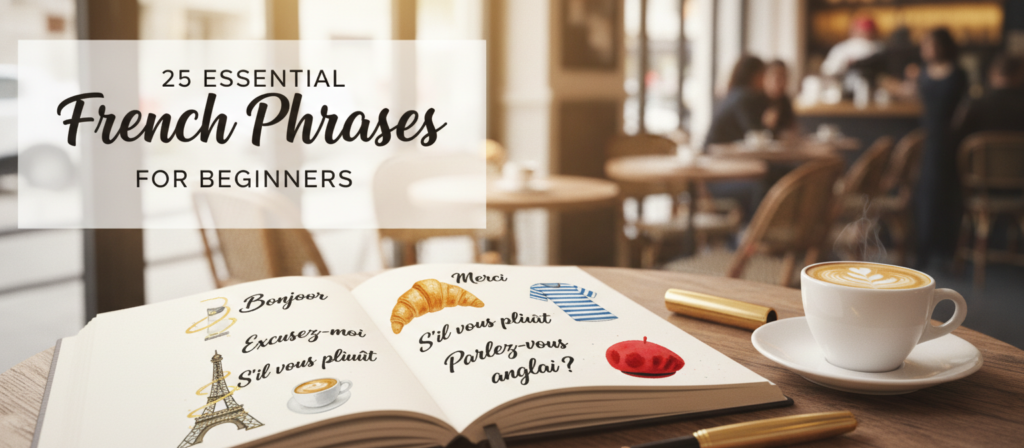
This guide walks you through 25 practical phrases split into three simple groups: greetings, getting around, and dining, shopping, or emergencies. Each one comes with easy pronunciation tips and real-world advice on when to use it.
Whether you are a complete beginner or simply brushing up before your next holiday, these words will help you speak with confidence from day one. You’ll be better prepared for cafés, shops, and casual chats alike.
Key Takeaways
- Learning basic French words before your trip boosts confidence and makes everyday interactions easier.
- Locals often respond warmly when travelers make an effort to speak their language.
- This guide covers 25 practical phrases for greetings, getting around, dining, shopping, and emergencies.
- Each phrase includes simple pronunciation help and tips for real-life use.
- Beginners can quickly learn and use these phrases, even without prior language experience.
- Knowing a few key words helps you navigate cafés, shops, and unexpected situations more easily.
Everyday Greetings and Politeness Phrases to Start Any Conversation
Courtesy is important in French culture, and it often starts with a simple greeting. Learning French greetings for travelers shows respect and helps make everyday interactions friendlier. Here are seven key phrases for common situations in France.
1. Bonjour / Bonsoir – Hello / Good Evening
Say “Bonjour” (bohn-ZHOOR) during the day and “Bonsoir” (bohn-SWAHR) in the evening. It is polite to greet shopkeepers, restaurant staff, or hotel staff before asking a question.
2. Merci / Merci Beaucoup – Thank You / Thank You Very Much
Say “mehr-SEE” or “mehr-SEE boh-KOO.” Use it after a waiter serves you or someone gives you directions. It is one of the most useful polite French expressions.
3. S’il Vous Plaît – Please
Pronounced approximately “seel voo PLEH,” this phrase makes any request more polite. Add it when ordering or asking for the bill.
4. Excusez-Moi – Excuse Me
Pronounced “ehk-skew-zay MWAH,” use this phrase to get someone’s attention politely or to apologize for bumping into someone.
5. Comment Ça Va? – How Are You?
Say “koh-mahn sah VAH” when speaking to friends or people you know in a casual setting. In a more formal interaction, “Comment allez-vous?” is more appropriate.
6. Enchanté(e) – Nice to Meet You
Pronounced “ahn-shahn-TAY,” this warm phrase is useful after someone introduces themselves, including in social or business settings. The written ending may vary according to the speaker’s gender, but the pronunciation remains the same.
7. Au Revoir – Goodbye
Pronounced “oh ruh-VWAHR,” use this when leaving a shop, café, or gathering. Saying it with a smile leaves a positive impression.
- Greet someone before asking a question, as skipping the greeting can come across as abrupt.
- Use polite forms such as vous in shops, restaurants, hotels, and other service interactions.
- Practicing these phrases builds confidence for real conversations abroad.
Practical Phrases for Getting Around and Asking for Help
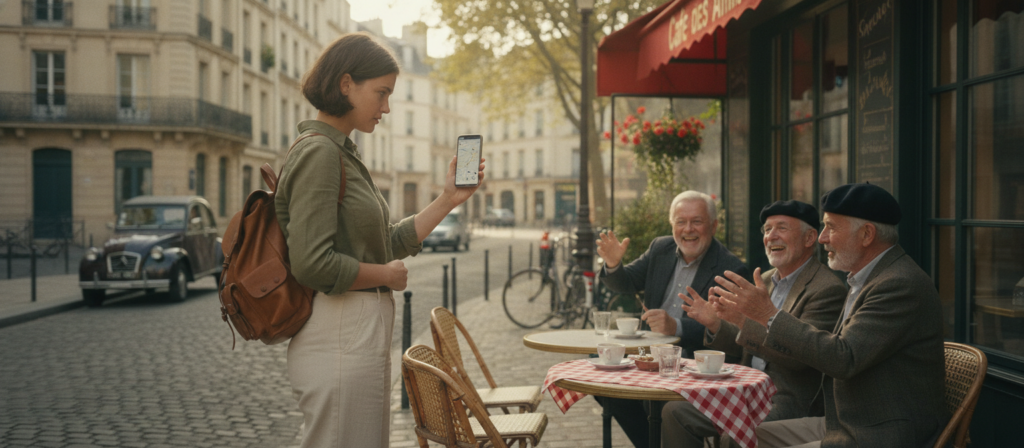
Standing at a train station with no idea where to go? The right French phrase can make a real difference. These travel French phrases can help you find your way around cities, markets, and unfamiliar places. Together, they provide useful survival French for tourists.
8. Où Est…? – Where Is…?
“Où est…?” (oo eh) means “Where is…?” It is useful for finding a place or object. For example, “Où est la gare?” means “Where is the train station?”
9. Parlez-Vous Anglais? – Do You Speak English?
“Parlez-vous anglais?” (par-lay voo ahn-glay) is a polite way to ask if someone speaks English. Even if the conversation then switches to English, many people will appreciate your effort to begin in French.
10. Je Ne Comprends Pas – I Don’t Understand
“Je ne comprends pas” (zhuh nuh kohm-prahn pah) explains that you do not understand. You can follow it with a request for the person to repeat or speak more slowly.
11. Pouvez-Vous M’aider? – Can You Help Me?
“Pouvez-vous m’aider?” (poo-vay voo may-DAY) is a polite way to ask for help. Use it with hotel staff, shopkeepers, or someone nearby when you need assistance.
12. Combien Ça Coûte? – How Much Does It Cost?
“Combien ça coûte?” (kohm-byan sah koot) lets you ask the price of an item or service before buying.
13. Je Voudrais… – I Would Like…
“Je voudrais…” (zhuh voo-DREH) is a polite way to say what you want. Add the name of an item when ordering food, buying tickets, or making a purchase.
14. C’est Où, Les Toilettes? – Where Is the Restroom?
“C’est où, les toilettes?” (say oo lay twah-LET) is an everyday way to ask where the restroom is. For a more polite version, say “Où sont les toilettes, s’il vous plaît?”
Essential French Phrases for Dining, Shopping, and Emergencies
Learning French phrases for dining, shopping, and emergencies can boost your travel confidence. These eleven phrases cover restaurant etiquette, common shopping needs, and urgent situations. Whether you are at a Parisian café or need help quickly, these French language basics are useful to know.
15. Une Table Pour Un/Deux, S’il Vous Plaît – A Table for One/Two, Please
Say this when you enter a restaurant and need a table. Pronounced approximately “ewn tahbl poor uhn/duh, seel voo pleh,” it is a useful first step towards ordering food in French confidently.
16. L’addition, S’il Vous Plaît – The Bill, Please
When you have finished eating, use this phrase to ask your server for the bill. Pronounce it approximately “lah-dee-SYON, seel voo pleh.”
17. Je Suis Allergique À… – I’m Allergic To…
Use this phrase followed by the specific allergen. For example, “Je suis allergique aux noix” means “I’m allergic to walnuts.” Because allergy terminology can be specific, travelers with serious allergies may also find it helpful to carry a clearly written allergy card.
18. Je Voudrais Commander – I Would Like to Order
This simple phrase tells your server that you are ready to order. It is a direct, polite way to begin ordering food in French.
19. Avez-Vous…? – Do You Have…?
Use this question in shops and restaurants to ask whether something is available. Simply add the item’s name after “avez-vous.”
20. C’est Délicieux – It’s Delicious
Compliment your meal with this cheerful phrase. It is also an enjoyable way to practice common French words while dining.
21. Au Secours! – Help!
In an urgent situation, this short exclamation can attract attention quickly. It is an important French phrase for emergencies to remember before you travel.
22. Appelez Une Ambulance – Call an Ambulance
If someone needs urgent medical help, use this clear command. Pronounced approximately “ah-play ewn ahm-boo-lahns,” it communicates that an ambulance is required.
23. J’ai Perdu Mon Passeport – I Lost My Passport
Losing travel documents is stressful, but this phrase helps you explain the situation clearly. Use it when speaking to the police, embassy staff, or another relevant official.
24. Je Ne Me Sens Pas Bien – I Don’t Feel Well
This phrase lets you explain that you feel unwell to a pharmacist, doctor, or hotel staff member. It is a useful part of everyday French language basics for health concerns.
25. Pouvez-Vous Répéter, S’il Vous Plaît? – Can You Repeat That, Please?
When you miss important details, this polite request asks someone to say them again. It works well in both emergencies and casual conversations.
Here is a quick reference table for the emergency phrases covered above, ideal for saving on your phone or printing before your trip:
| French Phrase | English Meaning | Best Used When |
|---|---|---|
| Au secours! | Help! | You need immediate attention from someone nearby |
| Appelez une ambulance | Call an ambulance | Someone requires urgent medical care |
| J’ai perdu mon passeport | I lost my passport | Reporting missing documents to the police or embassy staff |
| Je ne me sens pas bien | I don’t feel well | Explaining that you feel unwell to a pharmacist or hotel staff member |
| Pouvez-vous répéter, s’il vous plaît? | Can you repeat that, please? | You did not catch important instructions or information |
Bringing It All Together
Learning basic French phrases boosts your confidence in everyday situations during your trip. Whether you are saying hello to a shopkeeper in Paris or asking for directions in a small village, each phrase helps you communicate with locals.
Traveling through France becomes easier when you can order food, ask about prices, or explain health concerns without relying entirely on translation tools. Locals often appreciate the effort to speak their language, even if your accent is not perfect.
Before you leave, print this list or save it on your phone. Spend a few minutes each day practicing the phrases aloud so that they feel more natural by the time you arrive.
This list is just the start. French has much more to explore. Try a phrasebook, use a language-learning app, or watch French films with subtitles to continue improving your skills. For structured speaking practice, learners can also work online with qualified French teachers at Your Native Teacher and receive personalized feedback based on their goals.
Carry these words with your passport and map. They add nothing to your luggage but can make your French journey more personal, comfortable, and memorable.