


Ever stood at a bakery counter, unsure how to order a simple pastry, and felt your confidence slip away?
Knowing a few key expressions can change that.
Learning a few essential German phrases before your trip can make daily interactions easier, from ordering breakfast to asking for directions.
Whether you’re checking into a hotel, chatting with a shopkeeper, or navigating public transport, these expressions are useful in common situations.
You don’t need to speak fluently to connect with locals.
This guide introduces beginner-friendly expressions for greetings, dining, and finding your way. These are the basics for more confident everyday conversations.
By the end, you’ll have 25 practical phrases for real-life situations, whether you’re traveling or settling into daily life abroad.
With this list, you’ll feel more prepared and better able to communicate respectfully as you enjoy your journey.
A few well-chosen words can open doors, spark smiles, and turn routine errands into genuine moments of connection.
Key Takeaways
- Learning a small set of key expressions can significantly improve your travel experience in Germany.
- You don’t need fluency—just the right words at the right time to communicate effectively.
- This guide covers greetings, dining, and direction-related expressions for everyday situations.
- By the end, you’ll have 25 practical expressions ready to use with confidence.
- Speaking a few words in the local language shows respect and helps you connect with people you meet.
- Beginner-friendly expressions work well even if you’re just starting to learn German.
1. Friendly Greetings and Polite German Phrases
Courtesy is important in German-speaking settings, and knowing the right greeting can help you make a positive first impression. These basic German phrases can make everyday conversations with locals feel warmer and more natural.
This list includes polite phrases for everyday use. Each one comes with a simple pronunciation guide and usage tips.
1. Hallo (Hello)
Pronounced approximately “HAH-loh,” this is a common, friendly greeting. Use it with friends, peers, and in many informal everyday interactions. It works at any time of day.
2. Guten Morgen (Good Morning)
Say “GOO-ten MOR-gen” in the morning. It’s commonly used in cafés, offices, hotels, and other everyday settings. It sounds polite and friendly.
3. Guten Tag (Good Day)
“GOO-ten TAHK” is a standard daytime greeting. Use it in shops, restaurants, professional settings, and when speaking to people you don’t know well.
4. Guten Abend (Good Evening)
Use “GOO-ten AH-bent” in the late afternoon or evening. You’ll hear it in restaurants, theaters, hotels, and other settings. It is a polite evening greeting.
5. Wie geht es Ihnen? (How Are You? – Formal)
Say “vee gate es EE-nen” when using formal German. It is suitable for professional contacts and people you do not know well. The capitalized pronoun Ihnen signals respect and formality.
6. Wie geht’s? (How Are You? – Informal)
Use “vee gates” with friends, family members, and people you address informally. Pay attention to whether a situation calls for formal or informal German.
| Situation | Formal Version | Informal Version | English Meaning |
|---|---|---|---|
| Asking how someone is | Wie geht es Ihnen? | Wie geht’s? | How are you? |
| Saying thank you | Danke schön | Danke | Thank you very much / Thanks |
| Daytime greeting | Guten Tag | Hallo | Good day / Hello |
7. Bitte (Please)
Pronounced approximately “BIT-teh,” this is an especially useful word. It can mean “please” or “you’re welcome,” depending on the context. Learning it early will help your everyday German sound more natural.
8. Danke schön (Thank You Very Much)
Say “DAHN-keh shurn” to express extra thanks. It’s useful after someone has helped you or shown you kindness. Using bitte and danke schön will help you manage many polite exchanges.
2. Essential German Phrases for Ordering Food and Drinks
Dining in Germany can be a pleasure, from cozy cafés to lively beer gardens. Knowing a few key phrases makes ordering food and drinks easier. These German dining phrases can help you order confidently while following local customs.
9. Ich hätte gern… (I Would Like…)
This polite phrase is ideal for starting your order. For example, say “Ich hätte gern einen Kaffee” to mean “I would like a coffee.” It is a common way to order food and drinks in German.
10. Was empfehlen Sie? (What Do You Recommend?)
Not sure what to order? Ask your server, “Was empfehlen Sie?” It is useful when you would like to try a new dish or local specialty.
11. Ist das vegetarisch? (Is This Vegetarian?)
This question is helpful for anyone who follows a vegetarian diet. You can use it to check whether a particular dish is suitable for you.
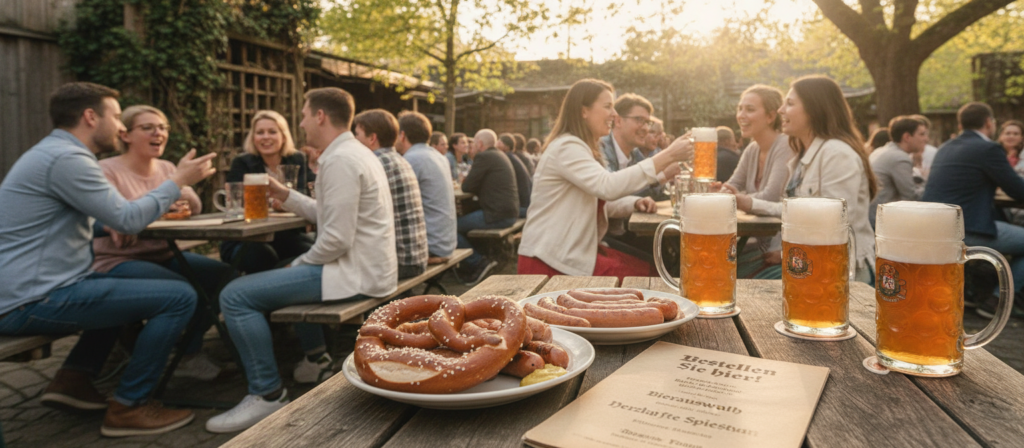
12. Ein Bier, bitte (One Beer, Please)
If you would like to order a beer, simply say “Ein Bier, bitte” at a beer garden, pub, or restaurant.
13. Noch einmal, bitte (One More, Please)
If you would like the same item again, you can say “Noch einmal, bitte.” This expression is useful when ordering another drink or asking someone to repeat something.
14. Guten Appetit (Enjoy Your Meal)
German speakers often wish one another a good meal before eating. Saying “Guten Appetit” is a friendly way to take part in this common dining custom.
15. Prost! (Cheers!)
When making an informal toast, say “Prost!” before drinking. You may hear it at celebrations, in beer gardens, or during meals with friends.
16. Die Rechnung, bitte (The Bill, Please)
When you’re ready to leave, say “Die Rechnung, bitte” to ask for the bill. It is a standard and polite phrase to use at the end of a meal.
17. Zahlen, bitte (I’d Like to Pay, Please)
A shorter way to indicate that you would like to pay is “Zahlen, bitte.” It is common in cafés and casual restaurants. Knowing these useful German phrases for travel can make dining interactions feel more natural.
| German Phrase | English Meaning | Best Used When |
|---|---|---|
| Ich hätte gern… | I would like… | Placing your order at a restaurant or café |
| Was empfehlen Sie? | What do you recommend? | Asking for the server’s suggestion |
| Prost! | Cheers! | Making an informal toast |
| Die Rechnung, bitte | The bill, please | Requesting the bill |
| Zahlen, bitte | I’d like to pay, please | Indicating that you are ready to pay |
3. German Phrases for Asking Directions and Getting Help
These German phrases for directions will help you find your way around. Whether you need to locate your hotel or find a restroom, knowing these expressions can make navigating a new city easier.
18. Wo ist…? (Where Is…?)
Wo ist…? is a key phrase for travelers. For example, say “Wo ist der Bahnhof?” to ask “Where is the train station?” Many people will appreciate your effort even if your German is not perfect.
19. Wie komme ich zu…? (How Do I Get To…?)
For more detailed directions, begin with Wie komme ich zu…? The form of zu may change when you add a destination. For example, “Wie komme ich zum Museum?” means “How do I get to the museum?”
20. Können Sie mir helfen? (Can You Help Me?)
Können Sie mir helfen? is a polite way to ask for help. It sets a friendly tone and works well in many situations.
21. Ich verstehe nicht (I Don’t Understand)
Ich verstehe nicht is useful when you do not understand something. You can follow it with a polite request for the person to repeat or explain what they said.
22. Sprechen Sie Englisch? (Do You Speak English?)
If you are struggling to communicate in German, ask Sprechen Sie Englisch? You may find English speakers in many places, but asking politely first shows respect.
23. Entschuldigung (Excuse Me)
Entschuldigung is useful in many situations. Use it to apologize, say “excuse me,” or get someone’s attention politely.
24. Links/rechts (Left/Right)
Knowing links (left) and rechts (right) is essential when following directions. Learning these words, along with geradeaus (straight ahead), can help you avoid confusion.
| German | English Meaning | Example Use |
|---|---|---|
| Links | Left | Turn left at the corner |
| Rechts | Right | The bakery is on the right |
| Geradeaus | Straight ahead | Walk straight ahead for two blocks |
| In der Nähe | Nearby | Is there a pharmacy nearby? |
25. Wo ist die Toilette? (Where Is the Restroom?)
Wo ist die Toilette? is a particularly practical travel phrase. Restrooms in Germany are often marked “WC” or with gender symbols, but this question will help when signs are not clear.
Learning these phrases can make traveling in Germany easier. You’ll be better prepared to ask for help, understand basic directions, and find your way around unfamiliar places.
4. Conclusion
These 25 expressions are a useful starting point for handling everyday situations in Germany. They can help you greet people, order food, ask for directions, and request assistance.
You don’t need perfect German to make a positive impression. Using even a few phrases shows respect for the language and culture and may lead to friendlier interactions with locals.
Start practicing now. Use flashcards, language-learning apps, or simply say the phrases aloud. For pronunciation correction and realistic speaking practice, you can also work with a qualified German teacher. At Your Native Teacher, learners can take live online lessons and receive personalised guidance based on their goals.
Small, consistent steps can make a real difference. Keep this list handy, practice often, and gradually make these phrases part of your everyday German communication.
FAQ
What are the most essential German phrases every traveler should know?
Essential phrases include greetings, dining expressions, and questions for asking directions. Phrases such as “Hallo” and “Danke schön” are useful in everyday interactions. For ordering food and requesting the bill, “Ich hätte gern…” and “Die Rechnung, bitte” are helpful. For directions, “Wo ist…?” and “Wie komme ich zu…?” are key expressions. Knowing these 25 phrases can make a trip to Germany easier even if you are not fluent.
Do I need to be fluent in German to travel to Germany?
No, you do not need to be fluent to enjoy a trip to Germany. Learning a few key phrases can improve your interactions. You may encounter people who speak English, particularly in larger cities and popular travel destinations, but using basic German shows respect and can lead to warmer conversations.
What’s the difference between formal and informal German phrases?
German distinguishes between formal and informal forms of address. “Wie geht es Ihnen?” is formal and is suitable for professional settings or people you do not know well. “Wie geht’s?” is informal and is generally used with friends, relatives, and people you address using du. Understanding this distinction can help you communicate appropriately.
How do I order food and drinks in German restaurants?
Start with “Ich hätte gern…” when ordering food or drinks. If you are unsure what to choose, ask “Was empfehlen Sie?” for a recommendation. To order a beer, say “Ein Bier, bitte,” and use “Prost!” when making an informal toast. When you are ready to pay, say “Die Rechnung, bitte” or “Zahlen, bitte.”
What should I say before and during a meal in Germany?
Say “Guten Appetit” before eating to wish others an enjoyable meal. This expression is common in both casual and formal settings. When making an informal toast, you can say “Prost!” before drinking.
How do I ask for directions if I get lost in Germany?
Use “Wo ist…?” to ask where something is. To ask how to reach a destination, begin with “Wie komme ich zu…?” You can also say “Können Sie mir helfen?” to ask politely for help. Knowing words such as “links,” “rechts,” and “geradeaus” will make directions easier to understand.
What do I say if I don’t understand German or need someone who speaks English?
Say “Ich verstehe nicht” if you do not understand. You can then ask “Sprechen Sie Englisch?” to find out whether the other person speaks English. Both expressions are useful when communication becomes difficult.
What are some especially useful German phrases for travelers?
“Wo ist die Toilette?” is particularly useful when you need to find a restroom. “Entschuldigung” is also versatile because you can use it to apologize, say “excuse me,” or get someone’s attention politely.
How can I practice these German phrases before my trip?
Use flashcards or language-learning apps for short, regular practice sessions. Say each phrase aloud, listen carefully to German pronunciation, and practice using the expressions in complete sentences. Speaking with a qualified teacher can also help you correct pronunciation and prepare for realistic travel situations.
Why is learning basic German phrases important even for a short trip?
Learning basic phrases shows respect for the local language and culture. Simple greetings such as “Guten Tag” and expressions of thanks such as “Danke schön” can make everyday interactions smoother. Even limited German can help you feel more prepared and engaged during your trip.