



Are you torn between learning with a live teacher and using a digital platform to learn a new language? You’re not alone. The choice matters because each approach supports different goals and learning styles.
Some learners prefer structured lessons with a teacher, while others value the convenience of a mobile app.
Modern language-learning apps offer short, accessible lessons you can complete almost anywhere. Online lessons, on the other hand, give you live, tailored practice with a real teacher.
Both online tutors and language apps can help you improve your skills, but they do so in different ways. One offers personal feedback and accountability, while the other provides flexible, self-paced practice.
This guide will help you compare the two methods and make an informed choice.
You’ll learn about the differences in cost, flexibility, personalization, speaking practice, and pace. By the end, you’ll have a clearer idea of which learning approach suits your goals, budget, and lifestyle.
Key Takeaways
- Both learning methods can support progress, but they suit different goals and learning styles.
- Language-learning apps offer affordable, flexible practice at almost any time.
- Live teachers provide personalized feedback and authentic conversation practice.
- Cost, flexibility, personalization, speaking practice, and pace are five useful factors to compare.
- Your goals, budget, and daily schedule can help determine which method fits best.
- Combining teacher-led lessons with supplementary app practice can provide a balanced learning routine.
What Sets Online Tutors and Language Apps Apart?
Online tutors rely on human connection and live interaction, while language apps primarily use technology and self-paced practice.
These approaches affect more than your budget. They can also influence your daily study habits, motivation, and progress. Understanding how each one works makes them easier to compare.
How Online Tutors Work
Online lesson providers connect you with qualified teachers through video calls. You schedule sessions in advance and work with a teacher whose style and experience fit your needs. Lessons can be adapted to your current level and goals.
Teachers adjust their approach in real time. If a grammar rule confuses you, they can explain it differently. If you’re progressing quickly, they can increase the difficulty. This live feedback loop is at the heart of online tutoring and offers something pre-built lessons cannot fully reproduce.
At Your Native Teacher, learners can work online with qualified teachers and receive personalized guidance based on their language goals.
How Language Apps Work
Language apps take a self-guided approach, using technology instead of a live teacher. Many use gamified lessons, spaced-repetition systems, and AI-powered practice tools to reinforce vocabulary and grammar over time.
You can open a pre-built curriculum whenever you have time, whether that is five minutes or a full hour. This flexibility makes language apps useful for learners who want structured, on-demand practice. Progress bars and automated feedback take the place of the human guidance provided during live lessons.
Online Tutor vs Language App: Key Comparison Factors
Choosing between an online tutor and a language app depends on several factors. Your budget, schedule, goals, and learning style are all important. This comparison can help you identify the best fit for your circumstances.
Cost and Affordability
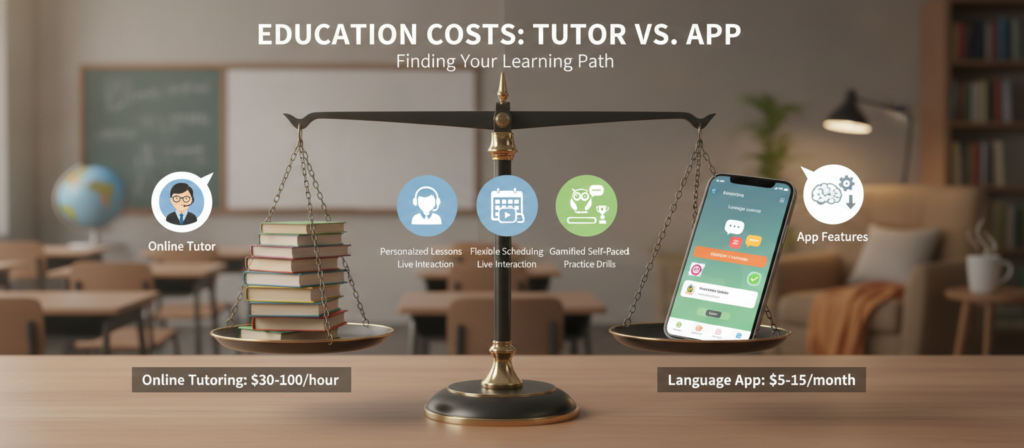
Online tutoring costs vary according to the provider, the teacher’s qualifications, the lesson length, and the type of support required. Specialized lessons, such as exam preparation or business-language training, may cost more than general conversation lessons.
Language apps are often less expensive because they provide automated content rather than live instruction. Some offer free features, while others require a monthly or annual subscription.
Apps may cost less over a year than regular private lessons, but the two options provide different levels of support. Here is a general comparison:
| Pricing Factor | Online Tutor | Language App |
|---|---|---|
| Typical Pricing Model | Per lesson or lesson package | Free access or subscription |
| Overall Cost | Varies by teacher, lesson length, and learning plan | Usually lower because practice is automated |
| Best Value For | Guided progress, speaking practice, and personalized feedback | Independent vocabulary, grammar, and review practice |
Flexibility and Convenience
Language apps offer considerable flexibility. You can use them at almost any time without scheduling a session.
Online tutors require some scheduling, but they offer live, real-time interaction that automated tools cannot fully match.
Busy professionals may find apps convenient for short periods of independent practice. Flexible online lessons can then provide focused support at scheduled times.
Personalization and Feedback
Human teachers provide personalized guidance. They can correct mistakes, adapt lesson plans, and focus on your weaker areas.
Apps use algorithms to deliver repetition, drills, and automated suggestions. These features can be useful for practice, but they may miss nuances that a teacher would notice.
This personal feedback is particularly valuable when working on complex grammar, pronunciation, or natural phrasing.
Speaking Practice and Real-World Application
Teachers can provide speaking practice that reflects real conversations. They can correct pronunciation, ask spontaneous questions, and explain relevant cultural context.
Some apps use AI chatbots or speech-recognition exercises. These tools may help learners rehearse words and sentences, but they cannot fully reproduce the unpredictability of a real conversation.
Conversational confidence develops through practice with interruptions, follow-up questions, and unexpected topics. Live lessons provide regular opportunities to develop these skills.
- Tutors offer: live pronunciation correction, cultural context, and spontaneous dialogue
- Apps offer: scripted practice, speech-recognition drills, and repeatable exercises
Learning Pace and Structure
Apps let you learn at your own pace. You can skip, repeat, or pause lessons whenever you choose.
Tutors can provide a structured learning plan and clear milestones. This accountability can help you remain consistent and identify what to study next.
Self-paced study works well for independent learners, but motivation may decline without deadlines or external guidance.
Which Option Fits Your Learning Goals?
Finding the right learning path is not a one-size-fits-all decision. It depends on your experience, lifestyle, and goals. Choosing an appropriate method can help you use your study time and budget effectively.
Best for Absolute Beginners
For beginners, a well-designed language-learning app can introduce common vocabulary and basic grammar through short, manageable lessons. This can help learners establish a regular study habit.
However, beginners can also benefit from a teacher from the start. Early feedback helps prevent pronunciation and grammar mistakes from becoming habits. An app can support daily review, while teacher-led lessons provide explanations, speaking practice, and a clear learning plan.
Best for Intermediate and Advanced Learners
For learners beyond the basics, an online tutor for advanced learners can provide valuable guidance. Apps may not reliably correct subtle grammar errors or explain why a phrase sounds unnatural. A teacher can identify these issues and offer alternatives immediately.
Teachers can also introduce relevant cultural context, idioms, professional topics, and more complex conversation practice. This depth supports progress toward accurate, confident communication.
Best for Busy Professionals and Travelers
For language learning for busy professionals, convenience is important. Apps can fit into a demanding schedule by offering short lessons at any time.
For international business or travel, however, a teacher can provide targeted vocabulary, role-plays, and feedback that generic app content may not offer. Focused sessions can help learners prepare for presentations, meetings, interviews, or common travel situations.
Combining Both for Maximum Results
Many learners use both apps and tutors. Combining a tutor and an app provides opportunities for frequent independent practice alongside expert feedback. The app remains a supplementary tool rather than a replacement for live instruction.
A practical routine might include short app-based review sessions during the week and regular online lessons with a teacher. This hybrid approach balances convenience, structure, speaking practice, and personalized correction.
| Learner Type | Best Approach | Why It Works |
|---|---|---|
| Absolute Beginner | Teacher-Led Lessons + Supplementary App | Clear explanations and early feedback are reinforced through independent review |
| Intermediate/Advanced | Online Tutor | Personalized feedback and cultural insight support more accurate, natural communication |
| Busy Professional/Traveler | Online Lessons + Flexible App Practice | Targeted coaching is supported by convenient practice between lessons |
| Long-Term Learner | Hybrid Approach | Combines consistent independent practice with expert correction and accountability |
Conclusion
Choosing between an online tutor and a language app depends on your goals, schedule, budget, and preferred learning style. Each option has strengths, and the best way to learn a language varies according to your starting point and what you hope to achieve.
Apps are useful for flexible vocabulary, grammar, and review practice. Tutors offer personalized feedback, structured guidance, and authentic speaking practice that automated tools cannot fully replicate.
Many learners benefit from combining both approaches. This provides regular independent practice alongside accountability and real human interaction.
Assess your current level, timeline, and desired level of guidance. If speaking, accurate communication, or structured progress is a priority, consider working with a qualified online teacher. An app can then serve as a convenient supplementary tool between lessons.